
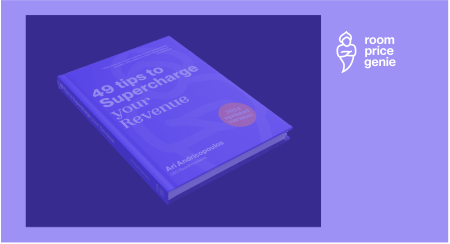
When we released 49 Tips to Supercharge Your Revenue back in 2017, the goal was simple: provide practical, easy-to-implement advice to help small, independent hotels compete more effectively.
Fast forward to today, and that advice still holds up remarkably well. What has changed is the technology behind it. Advances in revenue management systems (RMS) now enable hotels and groups of all sizes to pursue more advanced strategies.
So we’re adding five new profit-enhancing tips for the modern era.
Tip #1: Build a Tech Stack That Works as One
Back in 2017, we outlined the foundations of a solid hotel tech setup:
- A cloud-based PMS to manage operations
- A channel manager to manage distribution
- A booking engine to capture direct bookings
Today, an RMS to automate forecasting and pricing has become another must-have component for all sizes and types of hotels.
But just as important as having these tools is ensuring they work well together. This means:
- Data flows smoothly between systems
- Rates and availability stay in sync across channels
- Much less manual work is required
- Duplicate bookings and costly errors are reduced
An integrated tech stack saves time, reduces stress, and creates a single source of truth for your team.
Tip #2: Make Dynamic Pricing a Daily Discipline
Even in quiet destinations, demand changes constantly. Yet many hotels continue to cling to static pricing practices, setting seasonal rates and updating them either too late or not at all.
At its simplest, dynamic pricing means aligning room rates with supply and demand. When demand is strong, prices go up. When demand is soft, prices come down. This helps boost both occupancy and average rate.
An RMS automatically forecasts demand, monitors booking pace and competitor pricing, and updates rates up to several times a day to reflect current market conditions.
Dynamic pricing is now within reach for hotels of every size, but it only works efficiently when powered by modern technology.
Tip #3: Use Minimum Stay Restrictions to Protect High-Demand Dates
Hotels tend to obsess over pricing and overlook the importance of managing availability.
As a result, they raise rates on busy nights but still allow one-night stays to get through. It’s no wonder why many hotels are full on Saturdays but half-empty on Sundays.
Smart revenue management is about managing both rates and availability. When demand is high, this means:
- Closing out one-night stays
- Requiring bookings to be at least two nights (or longer)
- Offering incentives to encourage longer stays
Done right, availability controls boost occupancy on shoulder nights while protecting rates on peak dates, bringing in more overall revenue.
Tip #4: Evaluate Group Bookings Based on What They Replace
Group bookings can be a great way to fill multiple rooms at the same time, but hotels often accept them when transient bookings would be more profitable.
Before taking a group, hotels need to understand if it will replace transient demand that would have filled the rooms at a higher average rate.
This is where group displacement analysis comes in. Hotels compare the revenue from a proposed group booking with the revenue they’re likely to earn from individual guests over the same dates.
By evaluating group bookings this way, hotels have more confidence when quoting rates and know when to hold out for more lucrative business.
Tip #5: Anticipate Events Instead of Reacting to Them
Large events are a key driver of demand for hotels, whether it’s concerts, festivals, conferences, or holidays. But hotels often raise rates after it’s too late or fail to protect their inventory.
Most events are known well in advance, so there’s no reason to be caught off guard. By planning ahead, hotels can:
- Price accurately right from the beginning
- Implement stay restrictions before peak nights fill up
- Plan staffing and operations with greater confidence
By being more proactive with rates and restrictions, you can capture more revenue before, during, and after events.
How Today’s Revenue Management Tools Support These Tips
Thanks to innovations in technology, advanced revenue strategies are possible even for smaller hotels without a dedicated revenue manager.
To make it easy, RoomPriceGenie has introduced several product enhancements:
- Seamless Integrations: With connectivity to 80+ PMSs and channel managers, your tech stack works as one, enabling the free flow of rates and availability data.
- Dynamic Pricing: Respond automatically to changes in demand, while ensuring sudden spikes aren’t missed with Surge Protection.
- Automated Minimum Stay Restrictions: Ensure only the highest-value bookings get through during peak and shoulder periods.
- Group Displacement Calculator: Evaluate group bookings using automated demand forecasts instead of guesswork.
- Events Calendar: Display upcoming holidays and events on your dashboard so you can prepare pricing strategies early.
Same Principles, Smarter Tools
The advice from 2017 hasn’t changed, nor has the overarching goal of revenue management: earning more revenue with less effort.
Today’s tools simply make it easier and are more accessible, helping a much broader range of hotels price smarter, react faster, and plan further ahead.
Brush up on the basics of revenue management with a timeless classic: RoomPriceGenie’s 49 Tips to Supercharge Your Revenue e-book.
To learn how RoomPriceGenie can help your property increase your property’s profitability, start your free trial of our automated pricing solution today!