

Die meisten Fehler bei der Preisgestaltung in Hotels passieren, weil die Preise zu spät angepasst werden – nicht, weil den Teams die Daten fehlen.
Wenn ich das auf den Punkt bringe, sagt der Artikel im Grunde nur eins: Echtzeit-Prognosen helfen Hotels dabei, Nachfrageschwankungen früher zu erkennen und die Preise anzupassen, solange noch Zeit zum Handeln bleibt. Das ist wichtig, weil 72% der Hotelmanager sagen, dass falsche Prognosen zu Umsatzverlusten geführt haben, viele Hotels überprüfen ihre Preise immer noch manuell, und manche verlassen sich nach wie vor auf Tabellenkalkulationen. Wenn sich die Nachfrage an Feiertagen, zu Veranstaltungsterminen oder an stark frequentierten Wochenenden verändert, kann ein langsamer Überprüfungszyklus dazu führen, dass Zimmer stundenlang zum falschen Preis verkauft werden.
Hier ist der vollständige Überblick in einfachen Worten:
- Die manuelle Preisermittlung dauert lange. Viele Hotels überprüfen ihre Preise einmal am Tag, einmal pro Woche oder nur, wenn jemand Zeit dafür hat.
- Live-Prognosen verfolgen die Nachfrage in Echtzeit. Sie berücksichtigen das Buchungstempo, die Auslastung, die bisherigen Zahlen, Veranstaltungen, die Preise der Konkurrenz und die Marktnachfrage.
- Der größte Vorteil ist die Zeitersparnis. Du kannst noch am selben Tag reagieren, anstatt bis zur nächsten Überprüfung zu warten.
- Prognosen allein reichen nicht aus, um ein Unternehmen zu führen. Mindest- und Höchstsätze, Verweildauerregeln und Genehmigungs-Einstellungen bestimmen nach wie vor, was passiert.
- Verschiedene Teams nutzen dieselben Daten auf unterschiedliche Weise. Einzelunternehmer reduzieren den Verwaltungsaufwand, während sich die Vertriebsteams auf markierte Termine und Objekte konzentrieren.
- Automatisierung kann Zeit sparen und dafür sorgen, dass weniger Spitzen übersehen werden. Der Artikel weist auf etwa 10 Stunden pro Woche Einsparungen bei der Preisverwaltung und verweist auf eine Studie, die einen durchschnittlichen Umsatzsteigerung bei 19% nach der Umstellung auf eine prognosegesteuerte automatisierte Preisgestaltung.
Wenn du ein Hotel betreibst, ist die Erkenntnis ganz einfach: Die Preisgestaltung funktioniert besser, wenn dein Arbeitsablauf mit der Nachfrage Schritt hält. Das heißt, Live-Signale zu beobachten und klare Preisstrategie für Hotels Regeln und den Leuten die Möglichkeit geben, bei den wichtigsten Terminen einzuspringen.
So steigerst du die Rentabilität deines Hotels durch automatisierte Zimmerpreisgestaltung | mit Chas Scarantino
Was Live-Prognosen zeigen, was manuelle Preisgestaltung übersieht
Sobald sich die Preisgestaltung schneller anpasst, ist der nächste Vorteil, dass man bessere Signale erhält. Eine Echtzeit-Prognose wird aktualisiert, sobald neue Buchungsdaten eingehen. Sie berücksichtigt die aktuelle Auslastung, die Buchungsentwicklung, historische Daten, lokale Veranstaltungen, Preise der Konkurrenz und die Nachfrage am Reiseziel. Eine manuelle Preisgestaltung mit festgelegten Überprüfungszyklen kann da einfach nicht mithalten.
Eine Live-Vorhersage zeigt außerdem Schwung, nicht nur die Gesamtzahlen. Ein Datum mag in den Büchern noch schwach aussehen, aber wenn die Buchungen schneller steigen als im Vorjahr, könnte sich die Nachfrage bereits aufbauen. Wenn du wartest, bis die Auslastung stark aussieht, verpasst du vielleicht den richtigen Zeitpunkt, die Preise anzuheben, bevor die Nachfrage ihren Höhepunkt erreicht. Wie Ewa Gabara von RoomPriceGenie sagte: Feste Auslastungsregeln können nicht zwischen einem Termin in sechs Monaten und einem Termin morgen unterscheiden. Hier kommen Preisuntergrenzen, geschlossene Rabatte und Aufenthaltskontrollen ins Spiel.
Die wichtigsten Nachfragesignale
Historische Buchungsmuster zeigen, wie “normal” für ein property je nach Wochentag, Saison und Gästesegment aussieht. Die aktuelle Buchungsentwicklung zeigt, ob ein bevorstehendes Datum über oder unter dieser Basislinie liegt. Die gebuchte Auslastung gibt Aufschluss darüber, wie die Lage gerade aussieht. Externe Faktoren wie lokale Veranstaltungen, Preise der Konkurrenz und die Nachfrage am Reiseziel helfen dabei zu erklären, warum ein Termin möglicherweise vom üblichen Muster abweicht.
Interne Daten zeigen, wie dein property in der Regel bucht. Externe Daten zeigen, was die Nachfrage als Nächstes beeinflussen könnte. Wenn du beides zusammenführst, wird das Bild viel klarer. Ein Termin, bei dem sich die Abholung beschleunigt, und eine bestätigte lokale Veranstaltung sind ein weitaus stärkerer Anstoß zum Handeln als jedes der beiden Signale für sich allein.
Prognosen fließen in die Preisgestaltung ein, ersetzen aber nicht die Strategie
Eine Prognose zeigt, wo sich der Nachfragedruck aufbaut. Sie entscheidet nicht darüber, welche Maßnahmen zu ergreifen sind. Das liegt nach wie vor an Hotelpreisstrategien. Preisuntergrenzen, Preisobergrenzen, Vertriebskanalbeschränkungen und Regeln zur Aufenthaltsdauer legen fest, wie stark sich die Preise bewegen dürfen, wenn eine Prognose einen Tag mit hoher Nachfrage anzeigt. Ohne diese Leitplanken kann ein automatisiertes System auf einen kurzen Anstieg überreagieren oder die Preise über das hinaus treiben, was zur Marktposition des property passt.
Die Prognose zeigt das Signal auf, und die Preisregeln bestimmen die Reaktion. Ein sprunghafter Anstieg der Buchungen am Freitag könnte eine Erhöhung des BAR erfordern, die Einstellung eines ermäßigten OTA-Tarifs oder das Hinzufügen eines Mindestaufenthaltsregel, je nach Geschäftsmodell des Hotels. Diese Vorgehensweise hilft Einzelbetreibern, schneller zu handeln, und ermöglicht es den Umsatzteams, ihre Zeit für Ausnahmefälle zu nutzen, anstatt jedes einzelne Datum zu überprüfen.
Wie prognosegestützte Preisgestaltung manuellen Aufwand reduziert und verpasste Nachfragespitzen verhindert
Sobald Prognosen und Preisregeln miteinander verknüpft sind, ist die Preisgestaltung nicht mehr nur eine tägliche Vermutung. Sie wird zu einer Echtzeit-Reaktion auf die Entwicklungen am Markt.
Diese Veränderung wirkt sich massiv auf den Job aus. Durch vernetzte Prognosen wird die Preisgestaltung zu einer ausnahmebasierte Aufgabe. Anstatt dich immer wieder einzuloggen, um die Preise zu überprüfen, beobachtet das System den ganzen Tag über in Echtzeit das Buchungstempo und die Nachfragesignale und passt die Preise automatisch an. Wenn also eine lokale Veranstaltung die Nachfrage ankurbelt oder sich ein Feiertagswochenende schneller als sonst füllt, können sich die Preise schon während des Anstiegs der Nachfrage anpassen – und nicht erst ein oder zwei Tage später.
Nick, ein Hotelbesitzer in Aura Accommodation, lass es mich mal so sagen:
“Ich hab jetzt mehr Zeit. Ich hab mich heute zum ersten Mal seit einer Woche eingeloggt, und trotzdem wusste ich, dass sich meine Preisgestaltung im Laufe der letzten Woche genau und effektiv an die Entwicklungen auf dem Markt angepasst hat.”
Der Unterschied wird noch deutlicher, wenn man diese Vorgehensweise direkt mit der manuellen Preisgestaltung vergleicht.
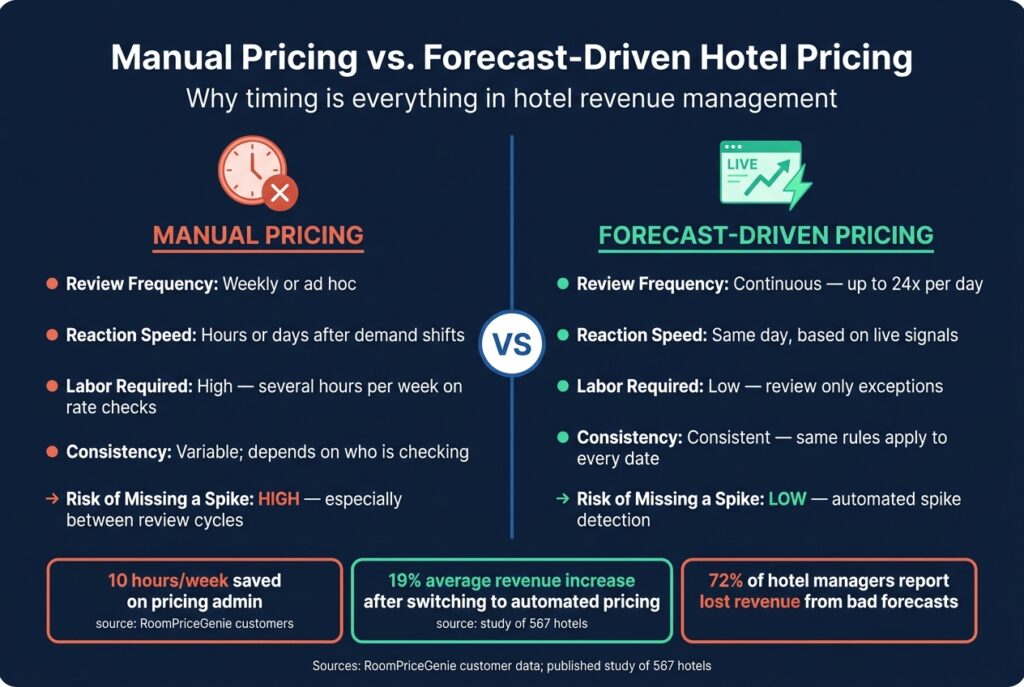
| Dimension | Manuelle Preisgestaltung | Prognosebasierte Preisgestaltung |
|---|---|---|
| Häufigkeit der Überprüfungen | Wöchentlich oder nach Bedarf | Fortlaufend |
| Reaktionsgeschwindigkeit | Stunden oder Tage nach einer Nachfrageverschiebung | Viel schneller, basierend auf Live-Signalen |
| Benötigter Arbeitsaufwand | Hoch – mehrere Stunden pro Woche für Tarifprüfungen | Niedrig – nur Ausnahmen prüfen |
| Konsistenz | Das ist unterschiedlich; hängt davon ab, wer das überprüft | Konsequent; für jedes Datum gelten dieselben Regeln |
| Das Risiko, einen Spike zu verpassen | Hoch, vor allem zwischen den Bewertungszyklen | Niedrig; automatische Spike-Erkennung |
Im Klartext: Manuelle Preisgestaltung lässt Lücken entstehen. Wenn die Nachfrage zwischen den Überprüfungszyklen plötzlich steigt, verpasst man leicht den richtigen Zeitpunkt. Die prognosegesteuerte Preisgestaltung schließt diese Lücke, indem sie auch dann die Lage im Blick behält, wenn niemand am Schreibtisch sitzt.
Auch die Zeitersparnis ist nicht gerade gering. RoomPriceGenie-Kunden berichten von Einsparungen von etwa 10 Stunden pro Woche Was die Preisverwaltung angeht: Diese Zeit muss nicht mehr für sich wiederholende Preisüberprüfungen und die Dateneingabe aufgewendet werden. Sie kann wieder in die Bereiche des Unternehmens fließen, in denen Menschen nach wie vor am wichtigsten sind: bei der Beurteilung von Situationen, im Gästeservice und bei schwierigeren geschäftlichen Entscheidungen.
Warum Preisbeschränkungen bei der automatisierten Preisgestaltung wichtig sind
Automatisierung geht schnell. Das ist der Vorteil. Und genau deshalb sind Kontrollmechanismen so wichtig.
Ohne Einschränkungen können schnelle Preisänderungen vom Plan des Hotels abweichen. Preisuntergrenzen, Preisobergrenzen und Genehmigungsregeln wirken wie Leitplanken. Sie sorgen dafür, dass das System im Rahmen der vom Hotel festgelegten Strategie bleibt.
Außerdem geben Übersteuerungsoptionen und Genehmigungs-Einstellungen den Hotels Spielraum, selbst zu entscheiden, wie stark sie sich einmischen wollen. Ein property könnte die Preisgestaltung laufen lassen auf Autopilot an normalen Wochentagen, und an Tagen mit hohem Risiko muss dann erst eine menschliche Freigabe erfolgen, bevor die Preise in Kraft treten. So übernimmt die Automatisierung die Routineaufgaben, während die Menschen das Sagen behalten, wenn es um mehr geht.
RoomPriceGenie ist so konzipiert, dass es innerhalb der vom Hotel festgelegten Dollar-Grenzen arbeitet, sodass das System den Absichten des Eigentümers folgt, anstatt die Kontrolle zu übernehmen.
Diese Zeitersparnis hat für Einzelunternehmer und Vertriebsteams unterschiedliche Auswirkungen.
Wie verschiedene Hotelteams Live-Prognosen nutzen
Sobald die Prognosen mit der Preissteuerung verknüpft sind, ändert sich die tägliche Arbeit je nachdem, wer sie nutzt. Dieselben Echtzeit-Nachfragesignale können zu ganz unterschiedlichen Preisänderungen führen. Ein Einzelbetreiber nutzt sie, um schneller zu handeln und weniger Zeit mit Verwaltungsaufgaben zu verbringen. Ein Umsatzteam nutzt sie, um die wenigen Termine oder Unterkünfte zu identifizieren, die einer genaueren Prüfung bedürfen.
Einzelunternehmer: Weniger Aufwand bei der Preisgestaltung, bessere Terminplanung an stark frequentierten Tagen
Für einen selbstständigen Fuhrunternehmer können Echtzeit-Prognosen einen ganzen Vormittag voller Tarifprüfungen auf einen kurzen Blick auf das Dashboard verkürzen. Die manuelle Preisermittlung kann Stunden in Anspruch nehmen, und an stressigen Tagen wird das oft auf die lange Bank geschoben. Wenn das passiert, bleiben alte Tarife länger in Kraft, als sie sollten.
Den größten Vorteil sieht man bei den Buchungsterminen. Prognosetools können Feiertage, Veranstaltungswochenenden und lokale Nachfragespitzen schon Wochen im Voraus anzeigen. Das gibt dem Betreiber Zeit, die Preise schrittweise anzuheben, zusätzliche Regeln zur Mindestaufenthaltsdauer, und vermeide es, zu früh zu Preisen zu verkaufen, die festgelegt wurden, bevor sich ein klares Marktbild abzeichnete. In einem Fall in den USA konnte ein Motel seine Auslastung an Wochentagen und den durchschnittlichen Zimmerpreis (ADR) steigern, nachdem es auf eine datengestützte Preisgestaltung umgestellt hatte.
Die gleichen Signale sind nach wie vor wichtig, auch wenn sich die Teamaufstellung ändert.
Umsatzteams: Überprüft Ausnahmen, anstatt jeden Tarif neu zu berechnen
Für ein Umsatzteam funktioniert die Prognose wie ein Filter. Sie zeigt die wenigen Termine und Objekte auf, die Aufmerksamkeit erfordern. Die meisten Umsatzteams haben kein Datenproblem. Sie haben ein Zeitproblem. Wenn die Basispreisberechnung automatisch für das gesamte Portfolio läuft, verlagert sich die tägliche Arbeit auf die Triage: herauszufinden, wo die Buchungen anziehen, wo die Nachfrage von der Prognose abweicht oder wo ein property unter dem Plan liegt.
Sara, Geschäftsführerin der Bellevue-Gruppe, sah, wie ihre 3-property-Gruppe ihr ursprüngliches Rentabilitätsziel von 10% übertraf und innerhalb weniger Monate einen Anstieg auf 15% erreichte. Das gelang ihnen, indem sie sich auf die Kennzahlen konzentrierten, bei denen tatsächlich Handlungsbedarf bestand.
| Aspekt | Einzelunternehmer | Umsatzteam |
|---|---|---|
| Ziel | Verwaltungsaufwand reduzieren; Umsatz an stark frequentierten Tagen sichern | Sorge für eine einheitliche Preisgestaltung; konzentriere dich auf Ausnahmen mit großer Wirkung |
| Arbeitsablauf | Kurzer Überblick über die prognostizierte Nachfrage und die empfohlenen Preise | Ausnahmeorientierte Überprüfung von markierten Daten und Eigenschaften |
| Maßstab | Ein property, manchmal ein kleines Cluster | Mehrere Hotels innerhalb eines Portfolios, oft in verschiedenen Märkten |
| Menschlicher Beitrag | Preise an Spitzenzeiten genehmigen; Kenntnisse über lokale Veranstaltungen | Gruppenbuchungen; komplexe Marktveränderungen; Budget- und Segmentstrategie |
Genau diese Lücke im Arbeitsablauf ist der Grund, warum Live-Prognosen sowohl für unabhängige Hotels als auch für Portfolio-Teams funktionieren. Das erklärt auch, warum sich automatisierte Prognosen so gut in die tägliche Preisgestaltung einfügen.
Live-Prognosen mit RoomPriceGenie in die Praxis umsetzen
So sieht das in der Praxis aus. Revenue Management Kurs – verknüpft die Buchungshistorie jedes einzelnen property – einschließlich Auslastungstrends, Auslastung und Vorlaufzeiten – mit aktuellen Marktsignalen wie den Preisen der Konkurrenz und bevorstehenden Veranstaltungen. Anhand dieser Kombination aus internen und externen Daten werden die Zimmerpreise automatisch aktualisiert – bis zu 24 Mal am Tag. Anstatt also auf den nächsten manuellen Check-in zu warten, können Unterkünfte noch am selben Tag reagieren, wenn die Nachfrage steigt oder nachlässt.
Sobald die Hotelprognose ist live, der nächste Schritt ist die Entscheidung, wie viel manuelle Kontrolle beibehalten werden soll. Anbieter, die eine automatisierte Konfiguration wünschen, können die Funktion aktivieren Autopilot für deine Modus, der jede Kursaktualisierung innerhalb vorgegebener Unter- und Obergrenzen abwickelt. Teams, die mehr Mitspracherecht wollen, können beim manuellen Überprüfungsmodus bleiben und vorgeschlagene Änderungen genehmigen, bevor sie live gehen. Das kann bei Großveranstaltungen sinnvoll sein, Gruppengeschäft, oder andere Termine, bei denen menschliches Urteilsvermögen noch eine Rolle spielt. Viele Objekte starten im Überprüfungsmodus und verschieben dann routinemäßige Termine in den Autopilot-Modus.
Eine veröffentlichte Studie mit 567 Hotels ergab einen Durchschnittswert von 19% Umsatzsteigerung nach der Umstellung auf eine automatisierte, prognosebasierte Preisgestaltung. Mittlerweile nutzen mehr als 4.000 Hotels in 65 Ländern die Plattform – von einzelnen property-Pensionen bis hin zu großen property-Hotelketten.
So sehen Live-Prognosen aus, wenn sie von der Theorie in die tägliche Preisgestaltung einfließen. Anstatt sich auf ihr Bauchgefühl zu verlassen, können Unterkünfte schnellere und fundiertere Preisentscheidungen treffen. Das bedeutet weniger Risiko, an einem stark frequentierten Wochenende zu niedrige Preise festzulegen oder an einem Preis festzuhalten, den der Markt bereits hinter sich gelassen hat – während das Personal sich auf die Anrufe konzentrieren kann, die eine persönliche Note erfordern.
FAQs
Wie verbessern Echtzeit-Prognosen die Preisgestaltung von Hotels?
Echtzeit-Prognosen helfen Hotels dabei, ihre Zimmerpreise auf der Grundlage von Daten statt nach Gefühl festzulegen.
Anstatt sich auf manuelle Entscheidungen und Bauchgefühl zu verlassen, können Hotels automatisierte Preisgestaltung nutzen, die auf die aktuellen Marktentwicklungen reagiert.
Das heißt, man greift auf interne Daten zurück, wie zum Beispiel Belegungs-, Buchungsgeschwindigkeit, und bisherige Wertentwicklung, zusammen mit externen Signalen wie Veranstaltungen vor Ort, Marktpreise, und Saisonalität.
Wenn die Nachfrage steigt, können Hotels ihre Preise zum richtigen Zeitpunkt anheben. Wenn es etwas ruhiger wird, können sie ihre Preise anpassen, um die Auslastung zu sichern.
Das ist eine einfachere und intelligentere Methode, um die Zimmerpreise an die sich ändernden Marktbedingungen anzupassen.
Welche Daten sollte eine Live-Prognose verwenden?
Eine Echtzeit-Prognose für Hotelpreise sollte sich auf zwei Hauptquellen stützen: interne Hoteldaten und externe Marktsignale.
Die internen Daten umfassen Auslastung, bisherige Ergebnisse, Stornierungen und das Buchungstempo. Das gibt dir Aufschluss darüber, was im property vor sich geht. Externe Signale zeigen hingegen, was drum herum passiert, wie zum Beispiel Preise der Konkurrenz, lokale Veranstaltungen, saisonale Nachfrage und allgemeine wirtschaftliche Trends.
Wenn man diese beiden Faktoren kombiniert, können Hotels ihre Preise in Echtzeit anpassen, wenn die Nachfrage sprunghaft ansteigt oder wenn sich eine ruhigere Phase abzeichnet.
Wie viel Kontrolle sollten Hotels bei der automatisierten Preisgestaltung behalten?
Hotels behalten die Kontrolle, indem sie in ihrem Revenue-Management-System klare Rahmenbedingungen festlegen. Dazu können Mindest- und Höchstpreise, Auslastungsziele sowie Beschränkungen der Aufenthaltsdauer gehören.
Von da an kümmert sich die Automatisierung um die routinemäßigen Preisänderungen. Hoteliers können sich für eine automatische Einstellung entscheiden, bei der sie sich um nichts kümmern müssen, oder einen Überprüfungs- und Genehmigungsmodus nutzen, wenn sie sich die Änderungen genauer ansehen wollen, bevor sie live gehen.
Tools wie RoomPriceGenie erklären Kursänderungen auch in einfacher Sprache. Während das System also die tägliche Arbeit erledigt, Die endgültige Entscheidung liegt immer noch bei dir.