

Los hoteles deberían fijar sus precios basándose en los patrones de reserva, no en conjeturas.
Si me fijo en cuando libro de visitas, ¿Qué días? lo que quieran, dónde reserva, y si Cuando vuelvan, podré fijar tarifas que protejan tasa de ocupación, ADR, RevPAR e ingresos netos.
Aquí tienes la versión resumida:
- Plazo de entrega ayuda a definir los tramos de tarifas, desde el mismo día hasta más de 90 días después
- Día de la semana muestra dónde van las primas de entre semana o de fin de semana
- Duración de la estancia ayuda a decidir cuándo tiene sentido aplicar las normas de estancia mínima
- Combinación de canales Esto es importante porque una habitación vendida directamente suele reportar más beneficios que una vendida a través de una OTA, lo que hace que Precios de las OTA frente a las reservas directas un factor clave para la rentabilidad
- Tarifas de cancelación puede modificar el valor real de una reserva
- Clientes habituales a menudo prefieren las ventajas especiales a los descuentos generales
- Automatización te ayuda a aplicar estas reglas cada día, en lugar de hacerlo a mano
Unas cuantas cifras lo dejan claro:
- Las comisiones de las OTA suelen ser 15%–30%
- Los costes de las reservas directas suelen ser 3%–7%
- Las tasas de cancelación de las OTA pueden llegar a 30%–50%
- Las tarifas de cancelación directa suelen ser 10%–25%
- En las fechas de mayor afluencia mencionadas anteriormente Ocupación prevista para el 80%, los hoteles pueden fijar los precios 30%–50% noches en las que te cubres por encima de los hombros
Pues la idea principal es sencilla: No te limites a preguntar: “¿Qué tarifa puedo publicar?”. Pregunta: “¿Qué reserva te sale más rentable después de descontar las comisiones, las cancelaciones y el gasto de los huéspedes?”.” Ese cambio te permite ajustar mejor los precios, reducir los descuentos poco rentables y tener más control sobre el margen.
A continuación, te voy a explicar cuáles son los principales indicadores de reservas que usan los hoteles y cómo cada uno de ellos influye en la decisión sobre los precios.
Crea reglas de precios en función del plazo de entrega y las fechas de estancia
Clasifica los plazos de reserva en franjas de antelación
El plazo de reserva suele ser el primer patrón de reservas en torno al cual un hotel debería fijar sus precios. Empieza con un historial de reservas de entre 12 y 24 meses de tu PMS o gestor de canales. Para cada reserva, calcula el plazo de reserva como el número de días que hay entre la fecha de reserva y la fecha de entrada. A continuación, clasifica las reservas en franjas útiles: el mismo día, de 1 a 3 días, de 4 a 7 días, de 8 a 14 días, de 15 a 30 días, de 31 a 90 días y más de 90 días.
Para cada segmento, fíjate en la ADR, la tasa de cancelaciones, la duración de la estancia y la combinación de canales. Así tendrás una forma sencilla de decidir dónde aplicar un recargo, dónde mantener fijas las tarifas básicas y dónde solo tiene sentido ofrecer un descuento en los periodos de menor actividad.
Hay una tendencia a la que vale la pena prestar mucha atención: el ADR del mismo día no siempre es más bajo. En épocas de mayor actividad, puede igualar o superar tu ADR general. En un estudio, las reservas del mismo día durante el fin de semana alcanzaron una media de $121.20 frente a una tarifa media diaria (ADR) total del fin de semana de $117.20, y en temporada alta, la tarifa media diaria (ADR) del mismo día alcanzó $147.60 en comparación con un total de $144.50.[1] Así que, si tu primer impulso es bajar el precio a última hora, frena un poco.
Usa este esquema:
| Rango de plazos de entrega | El huésped típico | Sensibilidad a los precios | Medidas recomendadas en materia de precios |
|---|---|---|---|
| El mismo día | Viajeros sin reserva / de última hora | Bajo cuando la demanda es alta; alto cuando la demanda es baja | Mantén los precios o aplica un recargo por reserva en el mismo día en las fechas de mayor demanda; haz descuentos solo cuando la ocupación esté claramente por debajo del objetivo |
| 1–3 días | A última hora / espontáneo | Variable | Mantén las tarifas altas si hay poca disponibilidad; ofrece solo descuentos modestos si la demanda es baja |
| 4–7 días | Ocio de última hora | Alto | Ofrece un pequeño descuento o un valor añadido solo cuando la ocupación esté muy por debajo de lo habitual |
| De 8 a 14 días | Los que planifican a corto plazo | Moderado | Estate atento a si el ritmo de subida se desvía de lo esperado y haz pequeñas operaciones a la baja solo si el impulso es débil |
| 15–30 días | Estándar (turismo/negocios) | Moderado | Mantén los tipos cerca del nivel de referencia y usa esto como tu ventana de referencia |
| 31–90 días | Los que planifican con antelación | De bajo a moderado | Mantén las tarifas cercanas a las básicas, o añade un pequeño recargo si el ritmo de reservas supera el de años anteriores |
| Más de 90 días | Los que planifican con mucha antelación | Bajo | Plantéate aplicar un pequeño recargo por reserva anticipada si la demanda es alta y el ritmo de ventas supera las cifras históricas |
El objetivo es sencillo: ajustar la tarifa de cada franja horaria a su señal de demanda. Una vez que hayas fijado los precios de los intervalos de reserva, puedes añadir reglas según el día de la semana y la duración de la estancia.
Establece las tarifas según el día de la semana y la duración de la estancia
Una vez que hayas definido los intervalos de antelación, fíjate en el rendimiento por días de la semana. Repasa cada día de los últimos 6 a 12 meses y, si puedes, desglósalo por temporada. Céntrate en la ocupación, el precio medio por habitación (ADR), la duración media de la estancia y el segmento o canal principal. En los mercados con mucha actividad empresarial, la demanda suele ser mayor entre semana y baja los fines de semana. En los mercados de ocio, los viernes y sábados suelen ser los días más cotizados. Una tarifa semanal fija no refleja ese patrón.
La duración de la estancia también es importante. Si tus datos indican que los viernes y sábados se llenan rápido, pero sobre todo con estancias cortas, un norma de estancia mínima En esas fechas, eso puede ayudar a proteger los ingresos. Por otro lado, si los días entre semana ya atraen por sí solos estancias corporativas más largas, una norma estricta de estancia mínima puede que no sirva de mucho, salvo para bloquear buenas reservas.
Usa este esquema:
| Día de la semana | Ocupación media | Puesto en ADR | Segmento dominante | Posición de tipo recomendada |
|---|---|---|---|---|
| De lunes a jueves | Más alto en los mercados empresariales; más bajo en los mercados de ocio | Premium en los mercados empresariales | Empresas / negocios | Aplica una tarifa más alta entre semana en los mercados con mucha actividad empresarial; usa tarifas más económicas entre semana en los mercados turísticos |
| Viernes–sábado | Más alto en los mercados de ocio; más bajo en los mercados de negocios | Premium en los mercados de ocio | Ocio / fin de semana | Los precios suben los fines de semana en los mercados de ocio; los hoteles de negocios pueden recurrir a tarifas más bajas o paquetes para los fines de semana |
| Domingo | Normalmente el más bajo | Con descuento / al hombro | Misto / ocio | Si hace falta, aprovecha un descuento de temporada baja para alargar la estancia |
En las fechas de mayor afluencia, una vez que la ocupación prevista supere 80%, el trabajo cambia. Ya no se trata de llenar habitaciones, sino de aumentar el ADR. En esa fase, las tarifas premium de De 30% a 50% Las tarifas base para los vuelos nocturnos con salida desde el extranjero pueden tener sentido.[2] También te conviene repasar estas normas cada trimestre, porque la composición de los segmentos va cambiando con el tiempo y las noches en las que más te va bien no siempre son las mismas.
Una vez que tengas establecidas las reglas basadas en fechas, compáralas por canal para proteger los ingresos netos. Poner en práctica estas estrategias puede suponer un aumento significativo resultados de la gestión de ingresos para inmuebles independientes. para inmuebles independientes.
Utiliza la combinación de canales y repite los patrones de los huéspedes para proteger los ingresos netos
Compara el rendimiento de los canales directos, las OTA y los canales corporativos
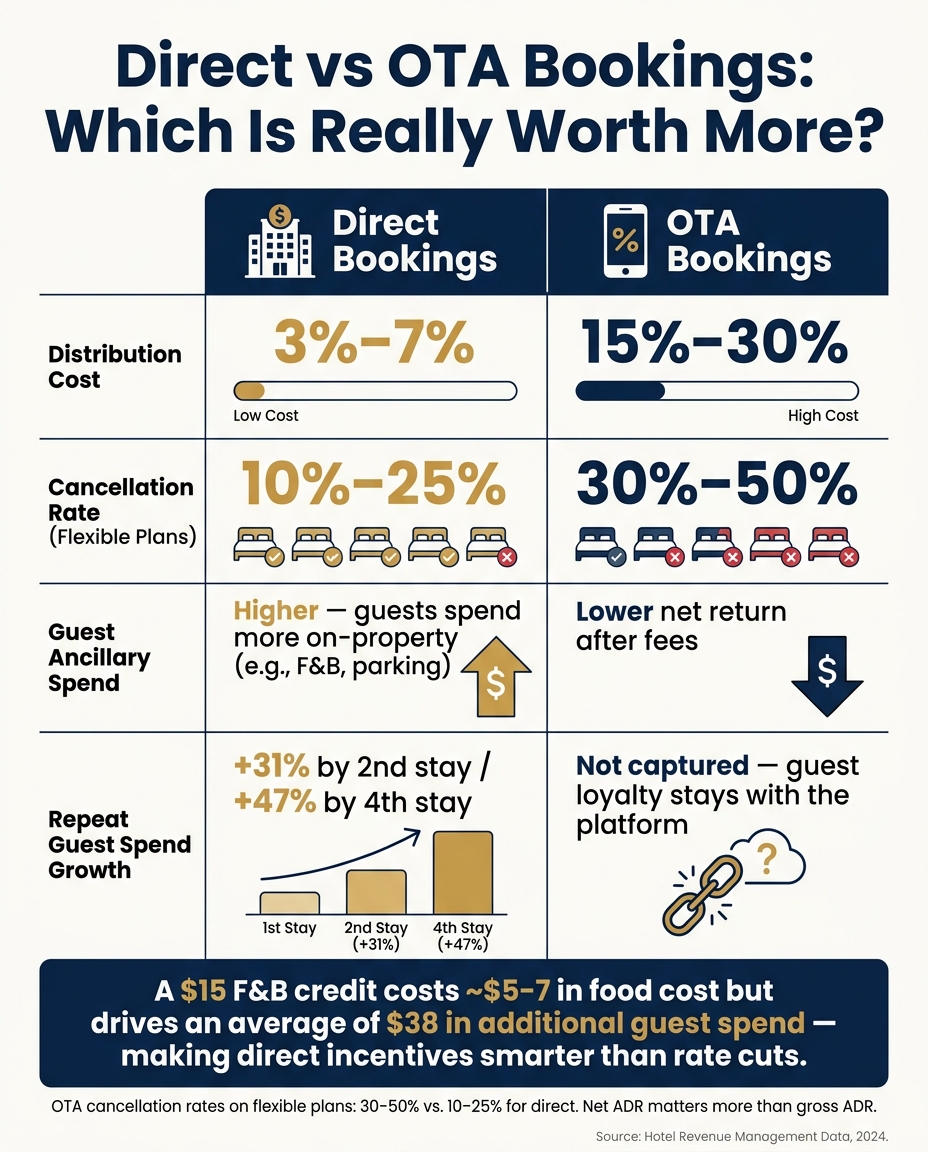
Una misma tarifa nominal puede dar lugar a unos ingresos netos muy diferentes según de dónde venga la reserva. Las OTA suelen quedarse con 15%–30% en comisión, mientras que los costes de las reservas directas suelen ser 3%–7%.
Hay otro problema: las reservas a través de OTA suelen tener una tasa de cancelación más alta. En los planes flexibles, las cancelaciones suelen ser 30–50% en el caso de las OTA, en comparación con 10–25% para reservas directas. te informo de que... [6][7][8][9][10] Si solo te fijas en el ADR bruto, es fácil perseguir unos ingresos que al final no se reflejarán del todo.
Una forma mejor de hacerlo es evaluar cada canal desde la perspectiva de los ingresos netos. Eso significa fijarse en ADR, ADR neto tras deducir los gastos de distribución, tasa de cancelación, plazo de reserva y gasto total por huésped. Después, ten en cuenta los posibles ingresos adicionales, como el desayuno, el aparcamiento o la comida y la bebida. A veces, la reserva con la tarifa pública más baja sigue siendo la mejor opción una vez que tienes toda la información sobre la mesa.
| Canal | Comisión habitual | Tasa de cancelación | Señal de valor | Enfoque recomendado |
|---|---|---|---|---|
| Directo | 3–7% [6][7][8] | 10–25% [7][9][10] | Mayor gasto en servicios complementarios [4] | Aprovecha los servicios adicionales, como el desayuno, el aparcamiento o condiciones flexibles, para desviar la demanda hacia las reservas directas |
| OTA | 15–30% [7][8][10] | 30–50% [7][9][10] | Rentabilidad neta menor tras deducir las comisiones | Mantén las tarifas públicas a buen nivel y usa este canal para llenar las fechas con menos demanda |
| Empresa | Negociado/moderado | Moderado | Demanda previsible entre semana | Utiliza una política de precios por segmentos y condiciones flexibles en lugar de bajar las tarifas |
En la práctica, eso suele significar mantener fijas las tarifas públicas en los canales de alto coste y utilizar decisiones estratégicas sobre los precios de los hoteles como incentivos para las reservas directas en lugar de descuentos generales. Una oferta de aparcamiento gratis o la posibilidad de cancelar con flexibilidad en las reservas directas puede ser suficiente para convencer a un huésped sin tener que tocar tu tarifa pública.
Esta misma forma de pensar en términos de ingresos netos también se aplica a los clientes habituales.
Precio para clientes habituales sin reducir el margen
Los clientes habituales son un segmento aparte, y lo más inteligente es fijar los precios en función del valor, no del estatus.
Según un conjunto de datos, el gasto en servicios complementarios aumentó 31% en la segunda estancia y 47% en la cuarta estancia. [3] Por eso los descuentos por fidelidad generales pueden salirte por la culata. Hacen que los huéspedes esperen una tarifa más baja cada vez, y el margen empieza a reducirse poco a poco.
Una estrategia mejor es identificar a los clientes habituales de alto valor usando indicadores prácticos como frecuencia de reserva, preferencia de tipo de habitación, historial de cancelaciones, periodicidad de las estancias y valor total de las estancias. Después, recompénsalos con descuentos reservados o ventajas que aportan valor añadido En cambio, una tarifa exclusiva para socios vinculada a la reserva directa, con desayuno incluido o salida tardía, suele salir más barata que una simple rebaja en el precio y a los huéspedes les cuesta mucho más compararla entre los distintos canales.
Te pongo un ejemplo sencillo. A $15: Crédito de alimentación y bebidas cuesta más o menos $5–7 en el coste de la comida, pero los clientes que lo usan gastan una media de $38 más allá del crédito. [5] Eso lo convierte en una herramienta de fidelización muy útil. Fomentas la fidelidad, mantienes al huésped interesado en property y evitas que baje tu tarifa visible.
Antes de bajar el precio, comprueba la frecuencia de las reservas, el historial de cancelaciones, la periodicidad de las estancias y el gasto total.
Aplica la automatización en todo el calendario y la cartera
Cómo se utilizan a diario los datos de comportamiento en la fijación automática de precios
Una vez que establezcas esas reglas basadas en el comportamiento, la automatización se encarga de que se apliquen en todas las fechas futuras del calendario. Esto es importante porque la fijación manual de precios simplemente no puede seguir el ritmo de las fluctuaciones diarias de la demanda. Optimización de precios en tiempo real actualiza las tarifas a lo largo del día según cambia la demanda. Te informo de que...
El sistema analiza los patrones históricos de reservas, la ocupación registrada y las señales de demanda en tiempo real, y luego ajusta las tarifas futuras a lo largo del día. A medida que cambian la ocupación, la demanda y las señales de demanda, la misma lógica de fijación de precios sigue funcionando en segundo plano.
Además, aplica automáticamente tus tarifas base, tu ritmo de reservas y tus reglas de plazo de reserva. Imagina que un sábado que queda a 30 días vista va por delante de su ocupación habitual. En ese caso, el sistema puede mantener las tarifas o subirlos. Si una fecha entre semana va por detrás del objetivo, puede bajar los precios para ayudar a impulsar la demanda.
Los límites mínimos y máximos de las tarifas actúan como barreras de seguridad ante esos cambios. El sistema puede ajustar los precios dentro de ese rango, pero no bajará del mínimo ni superará el máximo que hayas establecido. Esto ayuda a proteger el margen, la imagen de marca y las estructuras tarifarias negociadas.
Dónde encaja RoomPriceGenie para hoteles independientes y cadenas hoteleras
Para los hoteles que quieran que esas normas se gestionen automáticamente, Curso de revenue management se encarga de las actualizaciones diarias de las tarifas. RoomPriceGenie se ha diseñado desde cero para hoteles independientes, casas de huéspedes, apartamentos con servicios, propietarios que gestionan ellos mismos sus establecimientos y grupos hoteleros. No se ha adaptado a partir de un sistema empresarial.
La plataforma utiliza los datos de reservas de cada property y la demanda local en tiempo real para fijar las tarifas automáticamente. Según la empresa, los usuarios ven una media de Aumento de ingresos del 19%, salvo unos 10 horas semanales, y échale un Tasa de recomendación del 97% en HotelTechReport.
Conclusión: Convierte los patrones de reservas en decisiones de fijación de precios que se puedan repetir
Una vez que tengas tus reglas establecidas, el último paso es cumplirlas. El comportamiento de las reservas te da mucha información: cuándo reservan los huéspedes, de qué canales proceden y cuánto tiempo se quedan. Pero esos datos solo te sirven de algo cuando los conviertes en reglas de precios que puedas usar una y otra vez.
Los plazos de entrega, la demanda según el día de la semana, la combinación de canales y los patrones de los huéspedes habituales apuntan todos a una estrategia de precios clara: mantener la tarifa, subirla, limitar los descuentos o añadir valor en lugar de bajar el precio.
Ahí es donde gestión automatizada de ingresos Aquí es donde entra en juego. La fijación manual de precios empieza a fallar cuando detectas patrones pero no los aplicas siempre de la misma manera. La automatización aplica esas reglas a fechas futuras y actualiza las tarifas a medida que cambian la ocupación, la ocupación media y la demanda.
Protege el ADR en fechas clave. Dirige la demanda hacia canales con mayores márgenes. Reduce el tiempo que pasas ajustando las tarifas a mano. Cuando las reglas basadas en el comportamiento se ejecutan automáticamente, los resultados son más consistentes y dependen menos de quién esté gestionando las tarifas esa semana.
Preguntas frecuentes
¿Cuánto historial de reservas necesitan los hoteles?
Los hoteles no necesitan años de historial de reservas para empezar a mejorar sus tarifas.
Los datos históricos son útiles para detectar tendencias a largo plazo y patrones recurrentes. Pero si un property es nuevo, igual puedes ponerlo en marcha usando las tarifas de la competencia y datos de mercados externos.
A medida que se van recibiendo más datos internos, el RoomPriceGenie se va adaptando con el tiempo a los patrones de reserva propios del property. Además, tiene en cuenta indicadores en tiempo real como la ocupación, el ritmo de reservas y los eventos locales, para que las tarifas sigan siendo competitivas y se adapten a los cambios en la demanda.
¿Cuándo debería un hotel subir las tarifas en lugar de ofrecer descuentos?
Los hoteles deberían subir las tarifas cuando haya señales claras de que la demanda es alta, como por ejemplo:
- el ritmo de reservas va en aumento
- alta ocupación
- próximos eventos locales
- El ritmo de reservas para ciertas fechas va por delante del del año pasado
A medida que aumentan las reservas y cada vez es más difícil encontrar habitaciones, las tarifas más altas ayudan a los hoteles a sacar el máximo partido a cada reserva. Curso de revenue management puede detectar estas señales automáticamente y ajustar las velocidades en tiempo real.
¿Qué canales de reserva generan más ingresos netos?
Depende de los datos de reserva de tu property.
Los mejores ingresos netos suelen proceder de los canales que mejor funcionan según tus tendencias anteriores, tus patrones de recogida y tus márgenes de beneficio.
Cuando conectes tu Property Management System y tu gestor de canales, un sistema de gestión de ingresos podrá hacer un seguimiento del rendimiento por canal y mostrarte qué plataformas se ajustan mejor a tus objetivos y a tus metas de ingresos netos.