



Si tuviera que resumirlo en una sola regla, sería esta: usa el inventario compartido para la demanda puntual del día a día, y reserva la asignación fija solo para los pedidos confirmados negocio para grupos o por contrato.
Esa decisión afecta a velocidad de desplazamiento, exagerar la exposición, ingresos por habitaciones no ocupadas, y cómo se adapta una cartera con varios property a los cambios en la demanda. El inventario compartido mantiene las habitaciones en un único fondo común activo, por lo que la disponibilidad y las tarifas se pueden actualizar en todos los canales en unos De 30 segundos a 2 minutos. La asignación fija reserva habitaciones para un socio o un grupo, lo que garantiza el número de habitaciones, pero puede hacer que las habitaciones sin vender se queden atascadas en los bloques si la ocupación es baja.
Aquí tienes la versión resumida:
- Inventario compartido se adapta a inmuebles con una demanda similar, como los que se encuentran en zonas urbanas o cerca de aeropuertos
- Asignación fija Es ideal para bodas, conferencias, giras y cuentas de contrato
- Riesgo compartido en el inventario: los retrasos en la sincronización pueden provocar problemas de sobreventa y venta por duplicado
- Riesgo de asignación fija: Las habitaciones reservadas pueden quedarse sin ocupar y hacer que los precios para estancias de paso suban demasiado
- La mejor configuración para muchas carteras: un fondo común para reservas de última hora, además de bloques de habitaciones fijos para la demanda confirmada
- Regla clave: Un sistema debe gestionar las tarifas y la disponibilidad, y las habitaciones de grupo que se cancelen deberían volver a ponerse a la venta de inmediato
Comparación rápida
| Factor | Inventario compartido | Asignación fija |
|---|---|---|
| Cómo se venden las habitaciones | Un único grupo en directo para todas las propiedades y canales | Establecer el número de habitaciones reservadas para un grupo, un socio o un contrato |
| Mejor uso | Demanda transitoria | Demanda de grupos y contratos |
| Adaptación a los cambios en la demanda | Rápido | Más lento |
| Riesgo principal | Excesos debidos al retraso en la sincronización o a modificaciones manuales | Ingresos perdidos por habitaciones reservadas pero no vendidas |
| Repercusión en los precios | Necesita actualizaciones automáticas para mantenerse al día optimización de precios en tiempo real | Puede distorsionar los precios transitorios si se considera que los bloques se han vendido |
| La mejor opción para tu cartera | Agrupaciones de ciudades con una demanda similar | Carteras mixtas con un negocio muy centrado en el grupo |
Inventario compartido: respuesta más rápida, pero solo si el control del sistema funciona bien
Cuando la demanda cambia rápidamente, el inventario compartido permite que una cartera reaccione en cuestión de minutos en lugar de horas. Una sola actualización central de tarifas o restricciones puede llegar a todos los property y canales conectados al mismo tiempo. Pero ese tipo de rapidez solo funciona cuando un sistema gestiona la disponibilidad y las tarifas.
Cómo el inventario compartido te permite controlar mejor todas tus propiedades
El inventario compartido suele funcionar mejor en agrupaciones en el centro de la ciudad donde varios establecimientos atienden a un tipo de cliente similar y compiten por la misma demanda. Piensa en tres hoteles de servicio selecto a un paso de un centro de convenciones en Las Vegas, o un grupo de aeropuertos cerca de Dallas-Fort Worth.
En situaciones como esa, un equipo central de ingresos puede establecer estructuras de tarifas base, normas sobre la duración mínima de la estancia y escalas de recargos de forma unificada para todo el conjunto de establecimientos. Esto ayuda a evitar que los establecimientos asociados se hagan la competencia entre sí con precios más bajos para las mismas fechas de estancia.
Al mismo tiempo, las excepciones locales hacen que el modelo se mantenga anclado a la realidad del día a día. Por ejemplo, un hotel boutique del grupo puede querer cobrar un pequeño recargo por las suites o mantener una tarifa especial para socios locales. Puede hacerlo sin alterar la configuración del inventario compartido. Normas centrales con flexibilidad local Es lo que hace que la disponibilidad conjunta funcione en toda una cartera, sobre todo cuando los inmuebles se nutren de la misma base de demanda.
Cómo afecta el inventario compartido al riesgo de sobreventa
El inventario compartido no implica automáticamente que haya más ventas en exceso. Lo que sí hace es concentrar más riesgo en un único punto de control, lo que significa que la calidad de la sincronización cobra mucha más importancia. En la mayoría de los casos, las ventas en exceso se deben a retrasos en la sincronización, rutas de venta duplicadas o modificaciones manuales realizadas fuera del sistema de origen.
La solución es bastante sencilla en teoría: elige un sistema, normalmente el PMS o el CRS, como fuente de referencia. A continuación, conecta todos los canales a través de el trío tecnológico imprescindible de sincronización bidireccional y en tiempo real a través de la API. Las configuraciones modernas de PMS y gestor de canales suelen sincronizarse en unos 30 segundos a 2 minutos, lo que reduce considerablemente el riesgo de reservas duplicadas.
Las noches de mayor afluencia requieren un poco más de precaución. Reservar entre 2 y 5 habitaciones puede reducir los problemas derivados del retraso en la sincronización. Aun así, un control rápido del inventario sigue dependiendo de las actualizaciones automáticas de las tarifas.
Cuándo la automatización de los precios es más importante que nunca
El inventario compartido también aumenta la presión sobre la rapidez a la hora de fijar los precios. Si la demanda se dispara en un clúster compartido, ningún equipo va a poder seguir el ritmo cambiando manualmente las tarifas en cada property y en cada canal.
Ahí es donde una herramienta como Curso de revenue management Es aquí donde entra en juego. Lee el ritmo de reservas en tiempo real de cada property y las señales de demanda local, y luego envía las tarifas actualizadas a canales conectados de forma automática, hasta 24 veces al día. En el caso de los grupos, aplica una lógica de fijación de precios centralizada sin dejar de tener en cuenta el rendimiento propio de cada property.
Las ventajas no son pocas. Los hoteles que utilizan Curso de revenue management obtuvo unos resultados normales de +19% ingresos totales, +14% de ocupacióny +4% ADR. Los equipos también ahorraron unos 10 horas semanales en el trabajo de fijación de precios manual. Eso es muy importante cuando un fondo común de inventario genera más decisiones sobre tarifas de las que un equipo puede gestionar a mano.
Asignación fija: garantías más claras, pero más lentas a la hora de reequilibrar
Si el inventario compartido se decanta por la rapidez, la asignación fija se decanta por la seguridad. El principio es sencillo: las habitaciones se reservan para un socio, un grupo o un contrato hasta que se liberan. En una configuración multi-property, ese bloque se mantiene fuera del fondo común compartido hasta que se libera, lo que evita que un contrato agote el inventario de toda la cartera. Esa configuración es ideal para contratos a largo plazo, clientes habituales y compromisos de tipo de habitación que requieren un número fijo de habitaciones.
Cuando la asignación fija te da un control más claro
La asignación fija es ideal para bodas, conferencias y cuentas corporativas que necesitan un número garantizado de habitaciones con mucha antelación a la llegada. También es útil cuando un grupo quiere una tarifa única para todos los tipos de habitaciones, para que los precios se mantengan constantes durante toda la estancia.
Riesgo de ingresos: habitaciones sin vender atrapadas en bloques
Hay un problema. Las habitaciones reservadas en bloque cuentan como vendidas en los sistemas de ingresos, así que las reservas de grupos grandes pueden hacer que las tarifas para huéspedes esporádicos suban demasiado, a menos que se ajuste la ocupación de los grupos. La solución es bastante sencilla: actualiza el ajuste de la reserva de grupo o la cifra de “noches de habitación vendidas a grupos” para que el sistema de ingresos fije los precios en función de la demanda real de huéspedes esporádicos. Si un grupo grande cancela, haz ese ajuste enseguida.
Situaciones de grupos y contratos en las que la asignación fija es la mejor opción
Esta disyuntiva puede merecer la pena cuando la reserva es más importante que la opción de revender cada habitación día a día. La asignación fija es la mejor opción cuando la disponibilidad garantizada es más importante que la flexibilidad en los precios, sobre todo para los bloques de habitaciones reservados para grupos y los contratos de empresa que no deben modificarse en tiempo real.
En el caso de los bloques de habitaciones más grandes, no fijes el precio de la solicitud sin tener en cuenta el contexto. Compáralo con los ingresos por estancias puntuales que podrías obtener antes de dar el visto bueno. Utiliza el análisis de desplazamiento para sopesar la tarifa de grupo frente a los ingresos por estancias puntuales previstos antes de aceptar el bloque.
Inventario compartido frente a asignación fija: una comparación directa en cuanto a control, ritmo, riesgo y uso en grupo
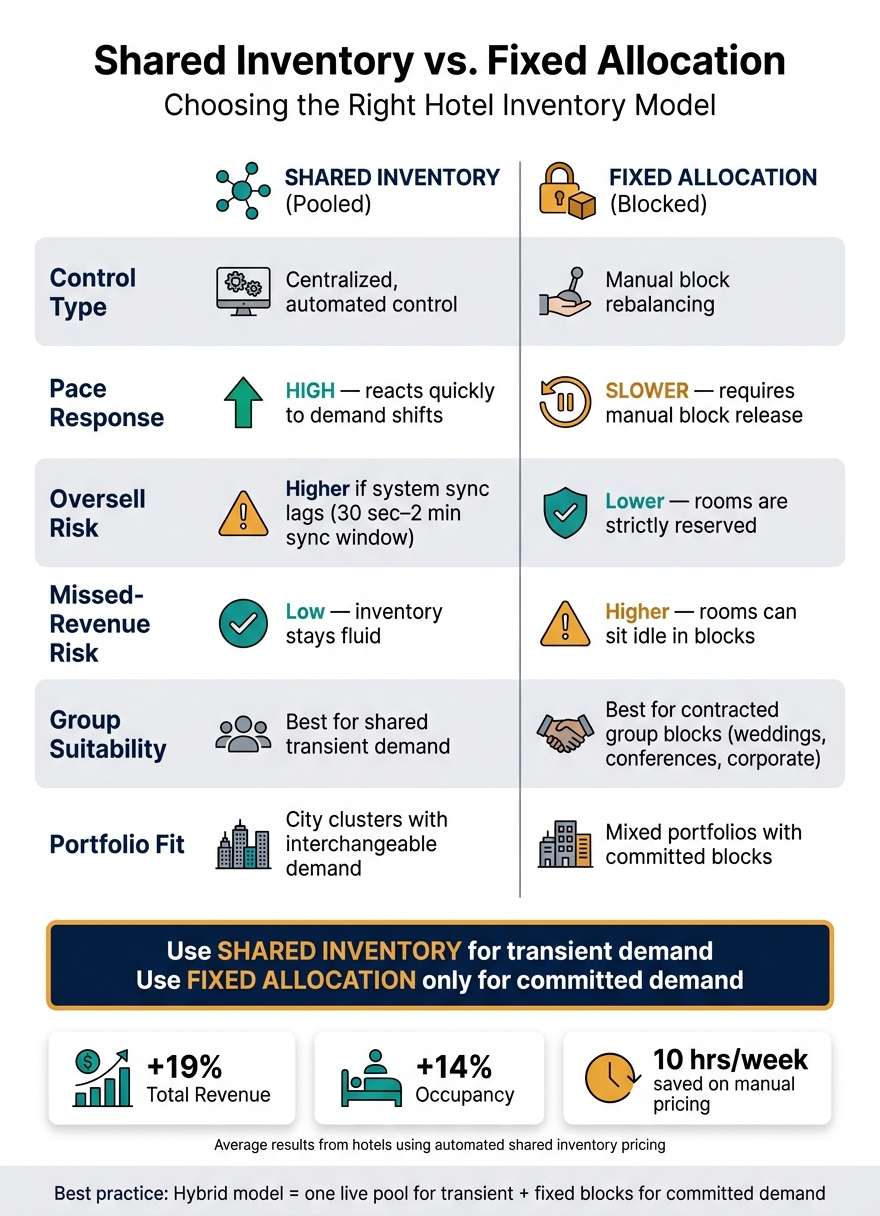
Ambos modelos pueden funcionar. Pero no funcionan igual, y esa diferencia se hace más grande a medida que tu cartera crece. La elección correcta depende de cómo se vendan tus propiedades día a día.
| Factor | Inventario compartido (agrupado) | Asignación fija (bloqueada) |
|---|---|---|
| Tipo de control | Control centralizado y automatizado | Reequilibrio manual de bloques |
| Respuesta de ritmo | Alta: reacciona rápidamente a los cambios en la demanda | Más lento: hay que desbloquearlo a mano |
| Riesgo de sobreventa | Más alto si el sistema se retrasa al sincronizarse | Planta baja: las habitaciones están reservadas exclusivamente |
| Riesgo de pérdida de ingresos | Bajo: el inventario se mantiene en constante movimiento | Más alto: las habitaciones pueden quedarse sin ocupar en bloques |
| Idoneidad del grupo | Lo mejor para una demanda transitoria compartida | Lo mejor para reservas de grupo contratadas |
| Adecuación a la cartera | Agrupaciones urbanas con demanda intercambiable | Carteras mixtas con bloques comprometidos |
Conclusión: elige el modelo que mejor se adapte a cómo se vende realmente tu cartera
Si tienes en cuenta el control, el ritmo, el riesgo y el uso en grupo, la elección es bastante sencilla: elige el modelo que mejor se adapte a cómo se vende la cartera.
El inventario compartido funciona mejor para la demanda transitoria de rápida rotación y la fijación centralizada de precios. La asignación fija tiene más sentido para grupos con contrato, reservas corporativas y ofertas de viajes organizados que necesitan habitaciones garantizadas.
Hay una regla sencilla que te puede ayudar:
- Usa el inventario compartido para cubrir la demanda puntual
- Usa la asignación fija solo para demanda firme
Pero hay un pero. Esto solo funciona si los bloques fijos aparecen en el sistema de inmediato. Si hay bloques fijos, sincronízalos en el sistema de ingresos para que no se interpreten como demanda transitoria. Y si se cancelan las habitaciones de grupo, liberalas enseguida.
Cuando el modelo de inventario se adapta a cómo se venden tus propiedades y tus sistemas están bien conectados, los precios pueden ajustarse con mayor precisión a medida que cambia la demanda. Esta adaptación es un factor clave cuando tú elige el sistema de gestión de ingresos adecuado para tu portafolio.
Preguntas frecuentes
¿Cuándo debería un hotel optar por un modelo híbrido?
Un grupo hotelero debería utilizar un modelo híbrido cuando los equipos de ventas y marketing operan tanto a nivel de property como a nivel corporativo.
Te ofrece un término medio muy práctico. La sede central establece la estrategia y los objetivos, mientras que los equipos de property se encargan de las decisiones diarias relacionadas con los ingresos y aprovechan su conocimiento del mercado local. Esta estructura ayuda a mantener la coherencia de la marca en todos los establecimientos sin limitar la libertad de los equipos locales, que son quienes mejor conocen a sus clientes, el ritmo del negocio y las condiciones del mercado.
¿Qué sistemas se necesitan para que el inventario compartido funcione bien?
El inventario compartido funciona mejor cuando tu PMS, gestor de canalesy RMS están conectados y se actualizan entre sí en tiempo real.
Una vez que la configuración esté lista, los datos de ocupación, el ritmo de reservas y los datos históricos se transfieren automáticamente entre los sistemas. Así tendrás todo lo que necesitas para hacer previsiones, fijar precios y controlar la disponibilidad en todos los canales, incluyendo la estancia mínima, el cierre de determinados tipos de habitaciones y los límites de sobreventa.
¿Con qué frecuencia hay que revisar o liberar los bloques de habitaciones fijos?
Revisa periódicamente los bloques de habitaciones reservados para que tus cifras sigan siendo las adecuadas a la hora de fijar los precios. No hay un calendario fijo. Aun así, las comprobaciones periódicas ayudan a que tus datos de gestión de ingresos se ajusten a lo que realmente está pasando.
Si se cancelan o modifican las reservas de grupo, actualiza esas habitaciones reservadas de inmediato. Si no lo haces, el sistema podría contabilizarlas como vendidas. Eso puede hacer que la demanda parezca mayor de lo que es y distorsionar las recomendaciones de precios.