
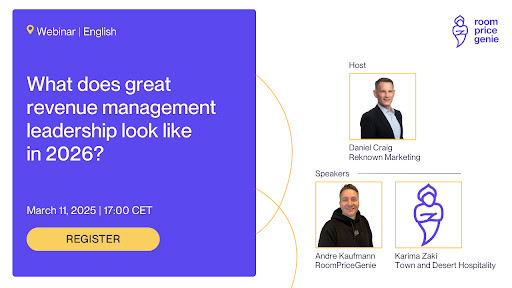
Kürzlich veranstaltete RoomPriceGenie ein Webinar mit Branchenexperten, um zu erörtern, wie sich die Rolle von Revenue Managern entwickelt und welche Fähigkeiten Führungskräfte brauchen, um erfolgreich zu sein.
Hier teilen wir sieben wichtige Strategien aus dem Webinar, Wie sieht eine gute Revenue Management-Führung im Jahr 2026 aus?
1. Geh über die Preisgestaltung hinaus: Die kommerzielle Gesamtleistung optimieren
In den letzten Jahren hat sich das Revenue Management von der Überwachung der Preisgestaltung zu einer hoch strategischen Führungsrolle entwickelt.
“Heutzutage ist die Preisgestaltung nur ein Instrument innerhalb einer viel umfassenderen Strategie”, sagt Karima Zaki, Vice President of Operations bei Town and Desert Hospitality. “Echte Umsatzführerschaft konzentriert sich auf die Optimierung der gesamten kommerziellen Leistung eines property.”
Diese breitere Perspektive umfasst:
- Angleichung von Preisgestaltung, Vertrieb, Marketing und Bestandskontrolle
- Demografische Daten und Segmentierung der Gäste verstehen
- Optimierung der Neben- und Gruppeneinnahmen neben den Zimmereinnahmen
- Aufbau starker Partnerschaften mit Vertriebskanälen
- Gründliche Kenntnisse der Revenue-Technologie aufrechterhalten
“Um aussagekräftige Ergebnisse zu erzielen, ist eine abteilungsübergreifende Zusammenarbeit erforderlich, die von einer visionären und engagierten Führungskraft geleitet wird, die in der Lage ist, die Daten zu interpretieren, das Team auszurichten und die Strategie in messbare Leistungen umzusetzen”, sagte sie.
2. Durchbrich den Lärm: Konzentriere dich auf die wichtigsten Leistungskennzahlen
Die Umsatzverantwortlichen von heute kämpfen mit zwei konkurrierenden Herausforderungen: zu viele Daten und zu wenig Zeit.
In einer Webinar-Umfrage gaben 68% der Teilnehmer/innen an, dass sie mehr Zeit für Prognosen und Bedarfsanalysen benötigen. Bei der Fülle an Daten, die heute zur Verfügung stehen, können Revenue Manager leicht in eine Analyse-Lähmung verfallen - wenn die Datenflut zu Unentschlossenheit oder Untätigkeit führt.
Anstatt auf jede kleine Schwankung zu reagieren, sollten sich Umsatzverantwortliche auf die Kennzahlen konzentrieren, die aussagekräftige Muster erkennen lassen, sagt Andre Kaufmann, Head of Global Partnerships bei RoomPriceGenie.
Neben den Kernindikatoren wie Raten, Belegung und RevPAR sind auch andere Signale wichtig:
- Pickup-Trends
- Buchungstempo vs. Erwartungen
- Marktverfügbarkeit und -verdichtung
- Rentabilität des Segments
“Daten unterstützen sichere Entscheidungen, wenn sie strategisch strukturiert sind”, sagt er. Die besten Umsatzverantwortlichen definieren klare Auslöser für Maßnahmen, verstehen das Timing und erkennen die Preiselastizität - die Auswirkungen von Preisänderungen auf die Zimmernachfrage.
3. Nutze die Technologie: Die tägliche Preisgestaltung der Automatisierung überlassen
Menschen treffen manchmal emotional getriebene, reaktive Preisentscheidungen, die nicht im besten Interesse des Hotels sind, so Andre.
“Wir können auf einen leeren Terminkalender oder den Umzug eines Konkurrenten überreagieren, und unsere Entscheidungen können je nach Druck, Stress oder sogar der Stimmung, in der wir an diesem Tag sind, variieren.”
Automatisierung hilft, diese Voreingenommenheit zu beseitigen. Ein modernes RMS kann viele betriebliche Aufgaben objektiv verwalten, darunter:
- Datenkonsolidierung
- Vorhersage-Updates
- Kontinuierliche Preisneuberechnungen
- Anpassungen in Echtzeit über alle Vertriebskanäle hinweg
Auch wenn Revenue Manager die RMS-Empfehlungen gelegentlich aufgrund von Erwägungen wie Gästetreue, Markenpositionierung oder Reputation außer Kraft setzen, liefert das System die Informationen, die Hoteliers brauchen, um nicht nur zu wissen, welchen Preis sie verlangen sollen, sondern auch warum, wo und wann sie handeln müssen.
“Computer geraten nicht in Panik oder werden übermütig, und sie machen keine Abschläge aus Angst”, sagt er. “Sie lesen die Signale objektiv, verarbeiten die Daten konsequent und passen die Preise auf der Grundlage von Logik an.”
4. Lege die Richtung fest: Fokus auf Entscheidungsfindung auf hoher Ebene
Das heißt aber nicht, dass die Revenue Manager aus dem Schneider sind. Wenn überhaupt, ist ihre Rolle wichtiger denn je - aber weniger taktisch als vielmehr strategisch.
“Die Technologie kann nicht entscheiden, ob dein Hotel in den nächsten drei Jahren neu positioniert werden soll”, sagt Andre. “Sie kann keinen Vertrag aushandeln. Und sie kann nicht zwischen kurzfristigen Einnahmen und langfristigem Markenwert abwägen.”
Was große Umsatzführer auszeichnet, ist ihre Fähigkeit, die Richtung vorzugeben, einschließlich:
- Strategische Marktpositionierung
- Entscheidungen zur Tarifstrategie und Markenwahrnehmung
- Zielkonflikte zwischen Auslastung und Rentabilität
- Teamübergreifende Zusammenarbeit
- Langfristige kommerzielle Vision
5. Mit Erwartungen umgehen: Wissen, wann man zurückstecken muss
Eine weitere große Herausforderung für Revenue Manager ist das “Management up”.”
Während des Webinars baten wir die Teilnehmer/innen, ihre größte Herausforderung bei der Zusammenarbeit mit Geschäftsführern oder Eigentümern zu nennen. Dreißig Prozent nannten ein mangelndes Verständnis der Umsatzstrategie, während 22% auf unrealistische Umsatzziele hinwiesen und 19% sagten, dass sie unter Druck stehen, die Preise zu erhöhen oder zu senken.
Wenn Geschäftsführer oder Eigentümer auf Preisentscheidungen oder Umsatzziele drängen, die im Widerspruch zu einer soliden Strategie stehen, müssen Umsatzverantwortliche manchmal mit Daten zurückschlagen.
“Die effektivste Strategie basiert immer auf Daten”, sagt Karima. Sie empfiehlt, gut vorbereitet zu den Treffen zu kommen, mit Berichten, die deine Buchungsposition und deine längerfristigen Aussichten klar aufzeigen.
Das kann Folgendes beinhalten:
- Wöchentliche Abholberichte
- Pace berichtet
- Berichte über Marktpreise und Nachfrage
- Vergleiche von Jahr zu Jahr
“Wenn Daten durchdacht analysiert und systematisch präsentiert werden, gibt das den Beteiligten die Gewissheit, dass die Umsatzstrategie kein Ratespiel ist”, sagt sie. “Es ist ein disziplinierter, datengesteuerter Prozess, der auf Mustern, Validierung und fundierten Entscheidungen beruht.”
6. Versammle das Team: Mit Vertrieb und Marketing abstimmen
Da die Automatisierung mehr alltägliche Aufgaben bei der Preisgestaltung übernimmt, haben die Revenue Leader mehr Zeit, eng mit dem Vertrieb und dem Marketing zusammenzuarbeiten und sich auf die Nachfragegenerierung zu konzentrieren.
Eine effektive Zusammenarbeit beginnt mit gemeinsamen wirtschaftlichen Zielen, so Andre. Dazu gehören das Erkennen von Nachfragelücken, das Management von Vertriebskosten und die Abstimmung von Rentabilitätszielen mit der langfristigen Positionierung.
Zusammenarbeit funktioniert am besten, wenn jedes Team seine Rolle spielt:
- Der Umsatz bestimmt die Logik der Rentabilität
- Marketing verstärkt die richtige Nachfrage
- Der Verkauf verhandelt strategisch
“Die Angleichung verringert interne Reibungsverluste und macht das Verkaufsteam zu einem einheitlichen Wachstumsmotor”, sagt er.
7. Sei ein Verfechter der Einnahmen: Lehre und lerne von deinem Team
Damit Ertragsstrategien erfolgreich sind, muss das gesamte Team die Vision verstehen und wissen, wie ihre Rolle dazu beiträgt, sagte Karima. Sie betonte, wie wichtig sowohl das Lehren als auch das Lernen ist.
“Ich habe festgestellt, dass die Front-Office-Teams gerne etwas über Revenue Management lernen möchten”, sagt sie. “Wenn sie die Gründe für Preisentscheidungen verstehen, können sie sie den Gästen besser erklären. Es bietet ihnen die Möglichkeit, sich weiterzuentwickeln und ihren Wert innerhalb des Unternehmens zu steigern.”
Gleichzeitig sollten die Verantwortlichen für den Umsatz genau zuhören, wenn sie an der Front sind. Sie bemerken oft Buchungstrends, Gästefeedback und betriebliche Erkenntnisse, die Daten allein übersehen könnten.
Wir lernen auch aus externen Quellen wie Marktforschungsberichten, Besucherbüros und Hotelverbänden.
“Je breiter deine Informationsbasis ist, desto fundierter werden deine strategischen Entscheidungen sein”, sagt sie.
Hier erfährst du mehr darüber, wie du ein großer Umsatzbringer wirst, Jetzt das kostenlose Webinar ansehen.
Hier erfährst du, wie du mit RoomPriceGenie die Profitabilität deines Hauses steigern kannst. Starte hier noch heute einen kostenlosen Test unserer automatisierten Pricinglösung!