
Working in a hotel used to mean mastering guest service and operations.
That’s still true today. But as technology plays an increasing role in hotel operations, understanding system connectivity, automation, and data flow has also become essential.
According to the 2025 RMS & RoomPriceGenie Hospitality Technology Survey of hoteliers worldwide, nearly 70% agreed that both service and tech skills are now essential to run a successful property.
This change in mindset has created a new kind of hotel operator: the Hospitality Engineer.
A Hospitality Engineer is a hotel operator who treats technology as one connected operational system — not a collection of separate tools — in order to reduce manual work, improve data quality, and capture more revenue.
Rather than a new job title, it’s an operational approach. The Hospitality Engineer mindset rests on four core capabilities:
- Building practical tech skills across the team
- Ensuring smooth connectivity between systems
- Preventing and resolving tech-caused operational failures
- Maintaining data quality as the foundation for automation and AI
Here’s how each capability helps hotels operate more effectively.
1. Building Tech Skills
Technology is no longer just the responsibility of the IT department. In fact, 25% of hotels don’t have a dedicated staff member responsible for tech support, according to our survey.
Modern hotels rely heavily on connected systems. Without practical tech knowledge in-house, staff struggle to resolve issues when systems stop functioning properly.
Hospitality Engineers bridge that gap. Not by becoming IT specialists overnight, but by developing a practical understanding of systems and workflows across the property.
When team members understand how systems connect and share information, hotels become more efficient and better positioned to capture revenue opportunities.
It’s no surprise, then, that tech knowledge is becoming one of the most sought-after operational skills in hospitality. The more tech-savvy staff are, the stronger the operation becomes.
2. Smooth System Connectivity
Many hotels assume tech problems are the result of too many systems.
But even smaller properties running only a PMS, channel manager, and revenue management system often experience the same operational frustrations as larger hotels with far more complex tech stacks.
Instead of constantly adding new software, Hospitality Engineers focus on improving communication between systems. That means working with tech providers that offer strong integrations and open APIs.
When systems communicate effectively, hotels operate far more efficiently. For example, when demand suddenly increases, room rates update automatically across channels instead of requiring staff to manually adjust pricing one channel at a time.
3. Preventing Issues Caused by Tech
Every hotel experiences occasional system issues, but for some operators, the problem is getting out of hand.
Our survey found that 62% of hotel operators spend between one and seven-plus hours every week troubleshooting tech issues. That’s time that could be better spent taking care of guests.
Common problems include:
- Syncing discrepancies across systems
- Duplicate or incorrect reservations
- Guest data errors
- Reporting inconsistencies
- Payment mismatches
As a result, guests are kept waiting, important decisions are delayed, and staff frustration grows.
Hospitality Engineers understand that the purpose of hotel technology is to reduce operational stress, not create more of it. They seek to understand why systems fail and where data breaks down. They then improve workflows to prevent recurring issues altogether.
4. Ensuring Data Quality
Today, hotels generate more data than ever before, but more data doesn’t automatically lead to better decisions.
If systems are disconnected and data quality is inconsistent, forecasts become unreliable, reports lose credibility, and automation tools become less effective.
That challenge is becoming even more important as AI becomes increasingly embedded in hotel technology. AI-powered and automated tools only work effectively when the underlying data is accurate, connected, and up to date.
Hospitality Engineers prioritize data quality from the ground up. They focus on building reliable operational foundations supported by clean, consistent data and strong system connectivity.
Seamless Technology Is Everyone’s Business
By adopting a Hospitality Engineer mindset, hotels benefit from:
- Better visibility across systems
- More reliable data
- Faster operational decision-making
- Smarter automation
- More confident pricing
- Less manual work and operational stress
The result is a more connected operation that adapts faster to change and gives staff more time to focus on guests.
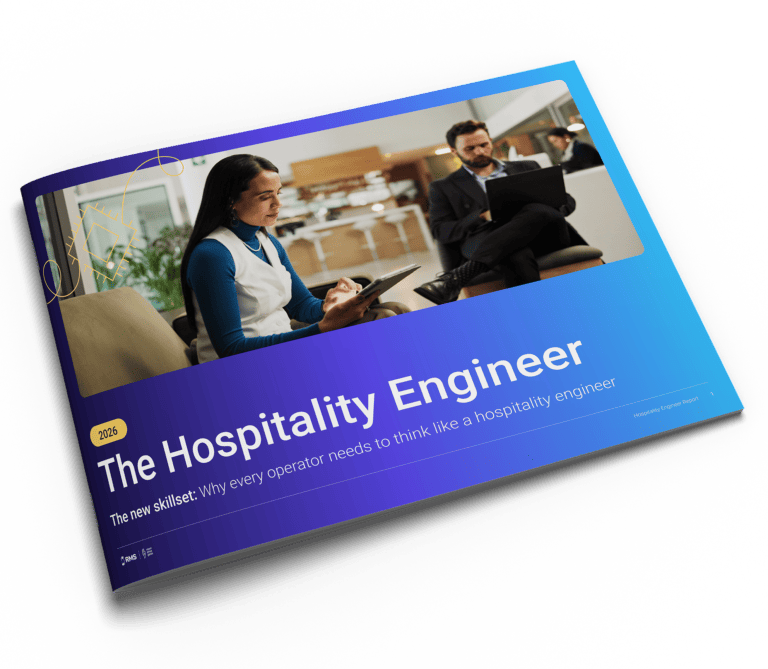
To learn more, download your free copy of The Hospitality Engineer report today.
To learn how RoomPriceGenie can help your property boost hotel sales and increase your property’s profitability, start your free trial of our automated pricing solution today!