Dynamic pricing is a flexible strategy where hotel room rates change based on real-time factors like demand, competitor pricing, and market trends. Unlike fixed pricing, it uses automation to quickly adjust rates, helping hotels boost revenue during high-demand periods and attract bookings during slower times. This approach is crucial for staying competitive in today’s fast-paced market, especially as travelers compare prices across platforms.
Key Takeaways:
- What It Is: Prices adjust in real-time based on data such as booking trends, local events, and competitor rates.
- Why It Matters: Helps hotels maximize revenue, maintain occupancy, and respond to market changes instantly.
- How It Works: Automated systems analyze demand, room availability, and external factors to set optimal rates.
- Tools to Use: Platforms like RoomPriceGenie automate updates, track competitors, and integrate with hotel systems.
Dynamic pricing ensures hotels can respond swiftly to market conditions, offering the right price at the right time. This article breaks down how it works, the benefits, and how to get started.
How Dynamic Pricing Works
Factors That Affect Pricing Decisions
Dynamic pricing relies on analyzing various factors – like demand trends, room availability, competitor pricing, and local happenings – to set room rates that maximize revenue. These systems keep an eye on booking speeds, search volumes, historical occupancy data, and competitor rates across different platforms. For instance, when bookings pick up or search activity surges, the system can automatically raise rates to capitalize on the increased demand.
As inventory shrinks, prices generally go up to reflect the scarcity of rooms. Hotels tend to adjust rates more aggressively as occupancy nears capacity. Local events and seasonal trends also play a huge role. Major gatherings like conferences, concerts, or festivals often lead to spikes in demand. Dynamic pricing systems anticipate these events, tweaking rates early and adjusting further as the event date approaches and room availability tightens.
Other market conditions, such as weather changes, economic shifts, or travel trends, also influence pricing strategies. Whether it’s an unexpected snowstorm or a sudden change in travel restrictions, dynamic pricing systems are designed to adapt quickly to such situations.
Real-Time Data and Automation
Automation has revolutionized how hotels manage their pricing. By processing vast amounts of data, these systems uncover patterns that would be nearly impossible to detect manually. In fact, nearly 72% of hospitality leaders are planning to adopt AI-powered revenue management tools [1]. These systems ensure that rates stay aligned with market conditions at all times.
One of the biggest advantages of automation is speed. Manual rate adjustments can take hours – or even days – especially across multiple booking platforms. Automated systems, on the other hand, can update prices in real time as market conditions shift. This quick response is critical during unexpected events or when competitors suddenly change their rates.
Automation also simplifies the workload for revenue teams by handling routine tasks like updating rates across platforms. This frees up time for managers to focus on broader strategies while ensuring pricing remains consistent and error-free across all distribution channels.
RoomPriceGenie is one such platform offering dynamic pricing automation tailored specifically for hotels.
Using RoomPriceGenie for Dynamic Pricing
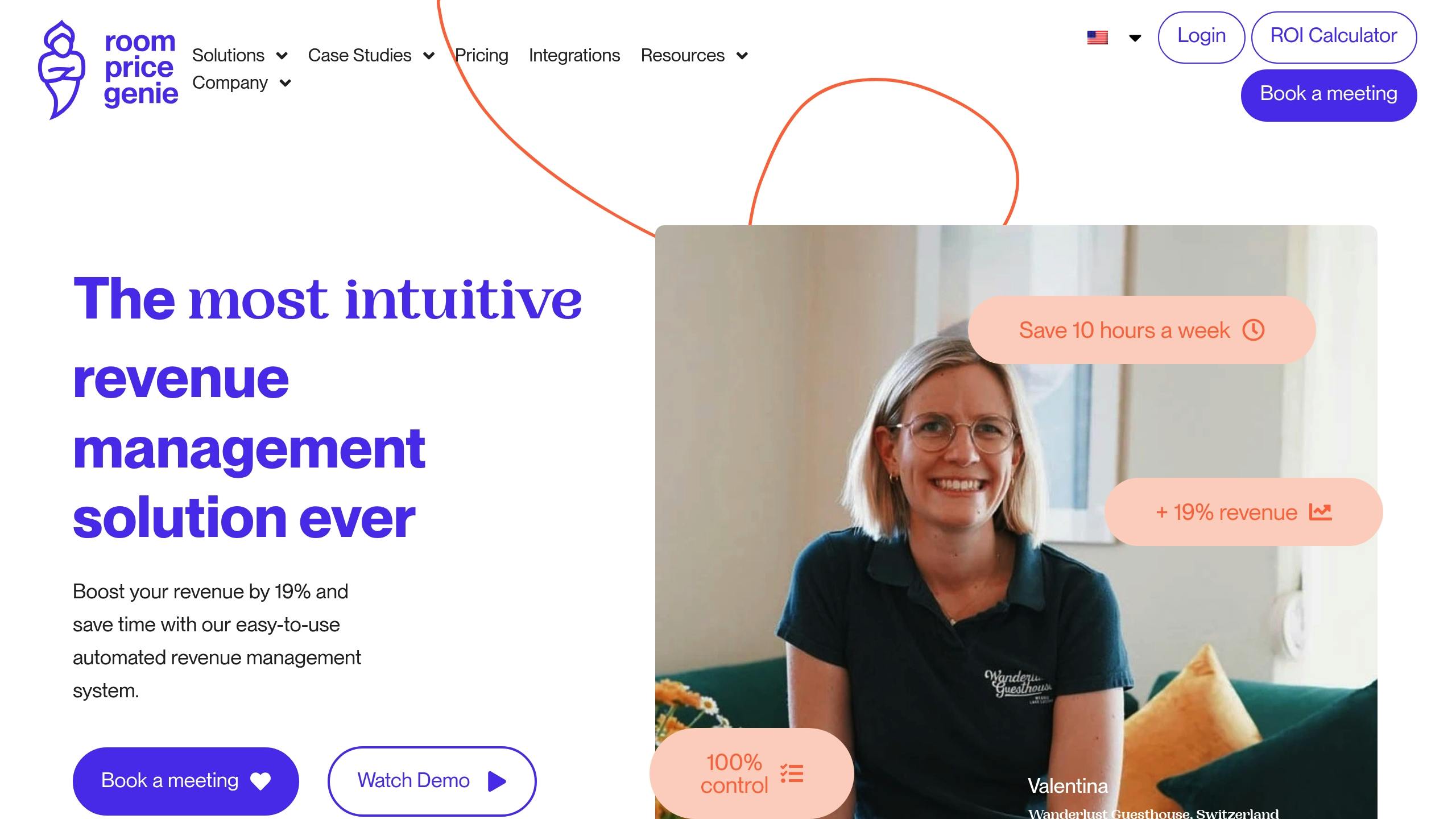
RoomPriceGenie takes dynamic pricing to the next level by automating real-time price adjustments. For users on the Professional plan, the platform provides up to 24 price updates per day, ensuring rates keep pace with market changes throughout the day. This frequent updating helps hotels seize revenue opportunities that might otherwise slip through the cracks.
The platform also monitors competitor pricing, offering valuable insights into market positioning. By analyzing historical booking data and current trends, RoomPriceGenie forecasts future demand, allowing hotels to plan their pricing strategies up to 18 months in advance. This is particularly useful for preparing ahead of peak seasons or major events.
Integration with existing PMS and channel manager systems ensures smooth operations without the need for manual rate entry. Surge price protection is another thoughtful feature, preventing rates from spiking too high and potentially alienating guests, while still allowing hotels to benefit from high-demand periods.
RoomPriceGenie’s revenue performance dashboard provides a clear picture of how pricing changes affect both occupancy and revenue. With detailed analytics and scheduled reports, hotels can track their pricing strategies and make data-driven decisions.
For situations that require a human touch, the platform also allows manual pricing adjustments. This hybrid approach blends the efficiency of automation with the expertise of seasoned revenue managers, offering the best of both worlds.
Benefits of Dynamic Pricing
Higher Revenue and Better Occupancy
Dynamic pricing helps hotels strike a balance between revenue and occupancy by automatically adjusting rates based on demand. Unlike fixed pricing, this approach ensures that hotels can maximize earnings from every booking opportunity.
A study of 36 independent hotels across six continents revealed that using automated dynamic pricing systems led to a 19% increase in RevPAR (Revenue Per Available Room)[2]. This boost comes from the system’s ability to pinpoint the ideal price that maximizes revenue while maintaining healthy occupancy levels.
By continuously monitoring bookings and adjusting rates accordingly, dynamic pricing ensures that hotels capture the best possible revenue – whether demand is soaring or slowing down. This proactive approach allows hotels to stay ahead of market trends and respond quickly to changes.
Quick Response to Market Changes
In addition to optimizing revenue, dynamic pricing enables hotels to adapt rapidly to shifts in the market. Hospitality demand can change in an instant – whether due to major events, competitor activity, or sudden spikes in local interest. Automated systems make near real-time rate adjustments, ensuring hotels remain competitive no matter the circumstances.
This constant monitoring is especially valuable for independent hotels, as it ensures they maintain competitive pricing even outside of regular business hours. With dynamic pricing in place, hotels can respond to market changes 24/7, without relying solely on staff availability.
Enhanced Competition and Guest Value
Dynamic pricing gives independent hotels a fighting chance against larger chains by providing them with advanced tools to compete effectively[2]. Automated systems allow smaller hotels to align their rates with market conditions and guest expectations, offering the same level of pricing sophistication as big-name brands – without the added costs.
AI-driven pricing not only ensures competitive rates but also minimizes errors that might harm guest relationships. By continuously analyzing market trends and adjusting prices, hotels can offer fair and attractive rates while maintaining profitability.
Beyond pricing, automation saves valuable time by eliminating the need for manual rate adjustments. This allows hotel staff to focus on delivering exceptional guest experiences and managing other critical aspects of the business. The result? Happier guests and a stronger competitive edge for independent hotels.
Common Problems and Solutions
Typical Dynamic Pricing Problems
Hotels often face hurdles when implementing dynamic pricing, primarily due to issues like inaccurate data and system integration challenges. Without access to real-time market insights, many properties make pricing decisions that fail to capture potential revenue. Additionally, technical difficulties in connecting existing systems can further complicate the process, leaving hotels unable to react swiftly to market shifts.
Another significant challenge is how guests perceive frequent price changes. Travelers may feel frustrated or even suspicious when they notice rates dropping shortly after booking. This can lead to dissatisfaction and harm brand loyalty, especially if the pricing feels unpredictable or unfair.
Manual pricing adjustments add another layer of complexity. Revenue managers often spend countless hours updating rates across various channels, analyzing competitor pricing, and forecasting demand. This time-consuming process not only delays necessary adjustments but also makes it harder for hotels to stay competitive in fast-changing markets. These challenges highlight the growing need for automated solutions.
Solving Problems with Automation
Automation offers a practical solution to many of these issues. RoomPriceGenie, for example, addresses data inaccuracies, heavy workloads, and integration challenges by automating rate adjustments. Its real-time optimization tools analyze demand trends, local events, and competitor pricing to determine the best rates. On the Professional plan, prices can be updated up to 24 times a day, ensuring hotels always operate with the most current information.
To maintain guest trust during high-demand periods, RoomPriceGenie includes surge price protection, which caps rate increases while still maximizing revenue potential.
The platform also simplifies bulk rate adjustments. Instead of manually updating prices for every room or date, revenue managers can apply strategies across multiple segments at once. This time-saving feature allows staff to focus more on guest services and strategic initiatives rather than repetitive administrative tasks.
RoomPriceGenie integrates seamlessly with property management systems and channel managers, eliminating the technical barriers that often hinder effective dynamic pricing. By syncing with major hospitality software platforms, the system ensures consistent rates across all booking channels without requiring manual updates. With these automation tools in place, the next step is fostering guest trust through transparent pricing.
Keeping Pricing Clear for Guests
Transparency is key to earning guest trust and minimizing complaints about price changes. Hotels should openly explain how rates are determined, emphasizing that fluctuations are based on real factors like demand, seasonality, and booking timing – not arbitrary decisions. This clarity helps guests understand and accept dynamic pricing as a reflection of market conditions.
Consistent messaging across all platforms reinforces this trust and ensures pricing credibility.
Hotels can also use segmentation to create tailored pricing strategies. By offering specific rates for different guest groups – such as business travelers, vacationers, or long-term stay guests – properties can meet diverse needs while optimizing revenue.
Advanced analytics and reporting further enhance this approach by providing insights into guest satisfaction alongside revenue performance. With these tools, hotels can refine their pricing strategies to strike the right balance between profitability and guest loyalty. The goal is to ensure dynamic pricing not only boosts revenue but also enhances the overall guest experience.
Automate Your Hotel’s Revenue Management
Maximize revenue, optimize occupancy, and save time with RoomPriceGenie’s intuitive automated pricing solution. Designed for independent hotels, groups, B&Bs and short-term rentals, our system ensures competitive, data-driven pricing with minimal effort.
Using Automated Revenue Management Tools
Key Features of Automated Pricing Tools
Automated pricing tools take dynamic pricing strategies to the next level by removing the guesswork and manual effort involved in managing rates. At the heart of these tools lies real-time pricing optimization, which continuously evaluates market trends, demand shifts, and competitor rates to adjust prices multiple times a day.
For example, RoomPriceGenie can update rates up to 24 times daily on its Professional plan, ensuring hotels don’t miss revenue opportunities. Its competitor tracking feature provides insights into how nearby properties price their rooms, while demand analysis uncovers booking trends to guide pricing decisions.
Another standout feature is integration capabilities, which allow these tools to work seamlessly with property management systems and channel managers. This eliminates manual updates, reducing the risk of errors like inconsistent rates that can confuse guests or result in lost revenue.
Other helpful functionalities include surge price protection, which prevents rates from spiking excessively during high-demand periods, and segmentation options, enabling hotels to tailor pricing for different guest groups, such as business travelers or vacationers. These features are especially beneficial for independent hotels looking to compete more effectively.
Benefits for Independent Hotels
For independent hotels and smaller properties, automated pricing tools are game-changers. Without a dedicated revenue management team, these tools provide a practical solution that’s easy to use and doesn’t require extensive training or staffing.
The time savings alone are substantial. Instead of spending hours manually tracking competitor rates and adjusting prices, hotel managers can dedicate more energy to enhancing guest experiences and improving their property. For instance, RoomPriceGenie’s Starter plan costs $214 per month, offering a cost-effective alternative to hiring a full-time revenue manager while delivering continuous pricing optimization.
These tools also help independent hotels compete with larger chains by providing access to advanced pricing strategies and market insights. Many platforms, including RoomPriceGenie, feature intuitive interfaces, allowing hotels to start with basic automation and gradually explore more advanced capabilities.
How to Implement Automated Pricing
To implement automated pricing successfully, begin by choosing the right plan for your property’s needs. Smaller hotels with simpler operations might opt for basic weekly updates, while those in competitive markets may benefit from more frequent adjustments and detailed analytics.
Next, focus on integration setup. This step involves linking the pricing tool to your property management system and channel manager. RoomPriceGenie supports integration with major hospitality software, making the process straightforward with clear instructions and support.
Once integrated, the next step is algorithm configuration. This involves inputting details about your property – such as room types, seasonal trends, and guest mix – so the system can align pricing with your specific goals. Factors like local events and demand cycles are also considered to fine-tune the tool’s effectiveness.
After activation, performance monitoring is key. Reviewing the system’s reports and dashboards ensures that revenue targets are being met. Over time, strategy refinement becomes essential. As market conditions shift and data accumulates, adjust pricing parameters to stay competitive. Many advanced tools offer features like bulk editing and segmentation to simplify these updates.
In the beginning, maintaining some oversight as the system learns your property’s booking patterns can help ensure pricing adjustments align with your expectations.
Getting Started with Dynamic Pricing
Key Insights for Hotel Owners
Dynamic pricing takes the guesswork out of setting room rates by replacing manual adjustments with a data-driven strategy aimed at maximizing both occupancy and revenue. Tools like RoomPriceGenie continuously analyze factors such as market trends, competitor pricing, and demand patterns to make smarter pricing decisions – something that would be nearly impossible to manage manually.
For independent hotels, this technology is a game-changer. With plans starting at $214/month, such as RoomPriceGenie’s Starter plan, smaller properties can access pricing automation that rivals the expertise of a full-time revenue manager. Features like real-time competitor tracking and surge price protection allow independent hotels to stay competitive and adapt quickly to market shifts, capturing revenue opportunities that might otherwise be missed.
Here’s a simple guide to help you implement dynamic pricing at your property.
Steps to Implement Dynamic Pricing
Getting started with dynamic pricing doesn’t have to be complicated. Follow these steps to make the transition smoother:
- Assess your current pricing strategy: Take a closer look at your existing approach and pinpoint areas where you’re falling short. Understanding these challenges will help you identify which automated features will bring the most immediate benefits.
- Choose the right level of automation: Tailor the pricing tool to your property’s needs. If you’re in a highly competitive market or experience frequent demand changes, you might benefit from tools offering frequent updates, like RoomPriceGenie’s Professional plan, which provides 24 daily pricing adjustments. For steadier markets, the Starter plan’s weekly updates might be sufficient.
- Integrate your systems: Ensure your property management system and channel manager work seamlessly with the pricing tool. This eliminates manual errors and ensures consistent rate updates across all booking platforms.
- Track and refine pricing: Once the system is live, monitor its performance over the first few weeks. Compare the automated pricing outcomes to your previous strategy and make adjustments to fine-tune the algorithm for your property’s unique needs.
- Stay adaptable: While automation takes care of most tasks, human oversight is still essential during special circumstances like local events, renovations, or unexpected market shifts that historical data might not fully account for.
How Do Top Hotels Use Dynamic Pricing For Revenue? – Hospitality Management Mastery
FAQs
How can hotels use dynamic pricing without harming guest satisfaction?
Hotels can keep guests happy while using dynamic pricing by focusing on clarity and added value. Make it easy for guests to understand why prices change – whether it’s due to higher demand during holidays or seasonal trends. Highlight this information on your website or booking platforms, so guests feel informed rather than surprised.
During peak times, consider adding perks to justify higher rates. Simple gestures like early check-in, complimentary drinks, or small room upgrades can go a long way in showing guests they’re getting more for their money. For loyal customers, use guest data to offer exclusive discounts or special deals that make them feel valued.
Finally, automated pricing tools can help you adjust rates efficiently, but always leave room for thoughtful manual tweaks. This way, you can strike a balance between maximizing revenue and ensuring loyal guests feel appreciated.
What steps can independent hotels take to effectively implement and use automated pricing tools like RoomPriceGenie?
To make the most of automated pricing tools, independent hotels need to start by grasping the basics of dynamic pricing. This approach involves changing room rates based on factors like market demand, competitor pricing, and seasonal trends. By digging into past booking data and studying market patterns, hotels can set prices that help boost revenue.
The next step is ensuring your property management system (PMS) works smoothly with the automated pricing tool. When integrated properly, this setup allows for real-time adjustments – like dropping prices during slow periods or raising them when demand surges. Lastly, it’s essential to keep an eye on how the tool is performing and tweak settings as necessary to match your hotel’s specific goals and market conditions.
How can dynamic pricing help smaller hotels compete with larger chains in pricing and market visibility?
Dynamic pricing gives smaller hotels a powerful tool to stay competitive by adjusting room rates in real-time. These adjustments are based on factors like demand, booking patterns, and competitor pricing. This approach helps hotels maximize revenue during busy periods while offering appealing rates to attract guests during quieter times.
With dynamic pricing, smaller hotels can quickly adapt to market shifts, keeping their rates competitive across booking platforms. This strategy not only boosts their visibility but also allows them to hold their ground against larger hotel chains, both in pricing tactics and overall market presence.
To learn how RoomPriceGenie can help your property increase your property’s profitability, start your free trial of our automated pricing solution today!