

It’s budget season for many hotels, and the fun never stops. Predicting the future is hard enough in normal times, and even trickier in today’s unpredictable market.
Taking the time to get the budget right is vital for any property, but it’s particularly important for small, independent hotels where every dollar counts.
A budget is your roadmap for the coming year, showing the revenue you expect to generate and how you’ll get there. If your assumptions are off, your plans for pricing, staffing, and operations can quickly veer off course.
Whether you’re a revenue manager, GM, hotel owner, or another lucky team member tasked with the 2026 budget, here are five do’s and don’ts to make the process smoother and more effective.
1. Don’t Just Copy-Paste Last Year’s Numbers
The easiest shortcut? Take last year’s actuals, add a few percentage points, and call it a day.
But market conditions can shift dramatically from one year to the next. If you want accuracy, you’ll need to dig deeper.
One option is zero-based budgeting. This involves starting from scratch each year and justifying every expense as if it were brand new. It’s thorough, but also time-consuming.
A practical compromise is to use last year’s results as a baseline, then adjust line by line based on forecasted demand, costs, and market trends.
2. Do the Research
Budgeting isn’t just about plugging numbers into a spreadsheet. It’s your chance to step back and see the bigger picture. Ask yourself:
- Were there disruptions last year that won’t repeat next year? (Unusually bad weather? A one-off event?)
- Are there more or fewer local events scheduled? (Conferences, concerts, festivals, etc.) How will they impact demand?
- Any changes in local supply? (Like a new competitor opening nearby.)
- How will broader economic and travel trends shape demand? (Think: shifts in leisure vs. business travel, more groups, international visitors, etc.)
The best way to answer these questions is through research: analyzing last year’s data, scanning industry reports, talking to colleagues, and checking your destination marketing organization’s (DMO) outlook.
Make it a team effort. Involve sales, marketing, and operations to get better insights and buy-in. Save time (and revisions) by asking owners early on about their expectations.
Want to avoid common pitfalls in revenue strategy? Check out 5 Hotel Revenue Management Myths That Could Be Costing You Money.
3. Don’t Just Hand Over the Data – Provide a Plan
After years of post-pandemic highs, many markets slowed in 2025. Will 2026 rebound? Hopefully. But hope is not a strategy. You need a plan.
Support your numbers with a strategy that explains how you’ll achieve them. Include:
- Market Overview: What’s the expected business climate? What’s happening in feeder markets, distribution channels, and among competitors?
- Commercial Strategy: What sales, marketing, and revenue management activities will help you hit targets?
- Competition: Who are your top competitors, and how will you attract market share from them?
- Costs: What expenses (including OTA commissions) will be required to achieve your revenue and profitability goals?
- Resources: Do you need new staff, tools (hello, pricing automation!), or training?
4. Don’t Overpromise (or Sandbag Too Much)
If you feel pressured to submit targets beyond your comfort zone, take this advice from Natalie Reiter, RoomPriceGenie’s Director of Revenue Management Success:
“A budget or forecast is only useful if it reflects reality. Inflating numbers to make things look better can have serious consequences.” Those consequences include overstaffing, mispricing, wasted resources, and the pain of missing targets.
On the other hand, “sandbagging” (lowballing the budget so you can easily exceed it) can leave you unprepared to capture and service real demand.
Be ambitious, but realistic. Stay flexible, and you’ll still find plenty of opportunities to outperform.
For more tips, check out Natalie’s article, What to Do When Your GM Wants to “Fix” the Forecast.
5. Connect Budgeting with Forecasting
Budgeting and forecasting go hand in hand. Think of it this way:
- Budget = target: The plan you set at the start of the year.
- Forecast = temperature check: Regular updates show whether you’re on track or need to adjust strategies.
- Actuals = reality. The results you achieve.
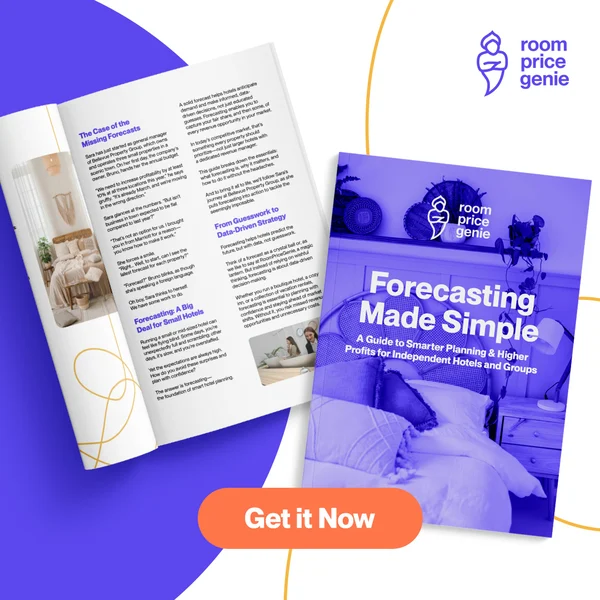
Once the year begins, forecasting takes the wheel. Forecast for the full year, update weekly, and use the insights to guide pricing, marketing campaigns, and operational planning. (Automated forecasting will make the job much easier.)
And at year’s end? Compare your budget, forecast, and actuals to understand variances and improve accuracy over time.
Follow these principles, and your budget is far more likely to sail through the approval process, leaving you free to focus on the next big challenge: putting it into action. And that’s when the fun really starts.
Want to learn more about forecasting? Download our Forecasting Made Simple guide here.
To learn how RoomPriceGenie can help your property increase your property’s profitability, start your free trial of our automated pricing solution today!